Home / Contested Corridors
EWRAC monitoring programme
Contested Corridors
A corridor under threat is a region under threat.
Terrorist and criminal groups do not settle where the land is empty. They entrench along the roads, railways and trade routes that carry a region's wealth: the N380 in Cabo Delgado, the RN4 in Ituri, the routes that feed the Lobito Corridor. Whoever controls a corridor can tax it, block it, recruit along it and use it to move fighters, weapons and illicit minerals.
Why armed groups target corridors
The economy is the battlefield
Revenue
Illegal checkpoints, extortion of transporters and traders, and the smuggling of minerals, timber and fuel finance armed groups.
Mobility
Main roads and their forest margins let fighters, weapons and supplies move quickly between hideouts and targets.
Visibility
An ambush on a highway sends a message far beyond the village where it happens, to governments, investors and the public.
Leverage
A group that can close a corridor can pressure the State, extract concessions and present itself as the real authority.
Recruitment
Wealth that passes communities by, without jobs or services, creates grievances that recruiters exploit.
What it costs
Everyone pays
- Livelihoods destroyed and communities displaced along the route
- Higher prices for food, fuel and goods as transport becomes dangerous
- Investors delay or withdraw, and flagship development projects stall
- Regional trade and integration are cut where they are needed most
- Trust in the State erodes as armed groups fill the vacuum
When a corridor falls under criminal or terrorist control, the damage spreads far beyond it: to national budgets, to neighbouring countries and to the region's development plans.
Corridors we watch
Explore the corridors
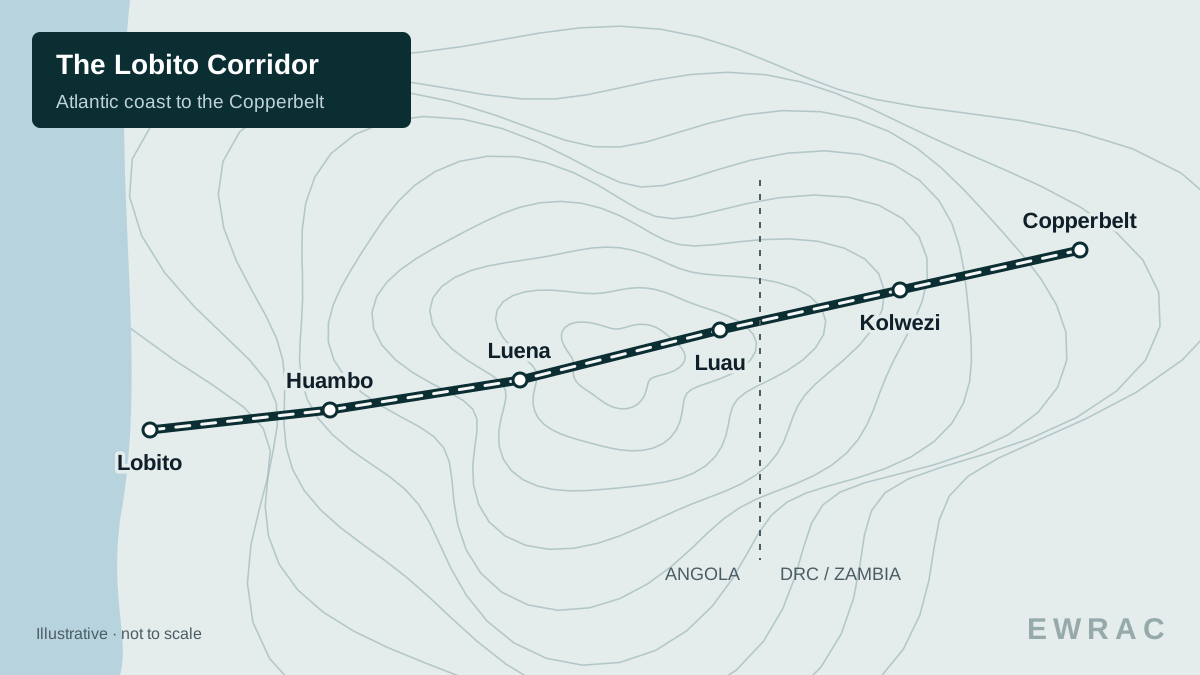
Lobito Corridor
The rail and road link from the Atlantic port of Lobito to the copper and cobalt belt of the DRC and Zambia. Its value makes it a target for mineral smuggling, illegal taxation and the criminal networks that feed armed groups in the east.
What we watch: Illicit mineral flows, organised crime and the security of a strategic investment route.
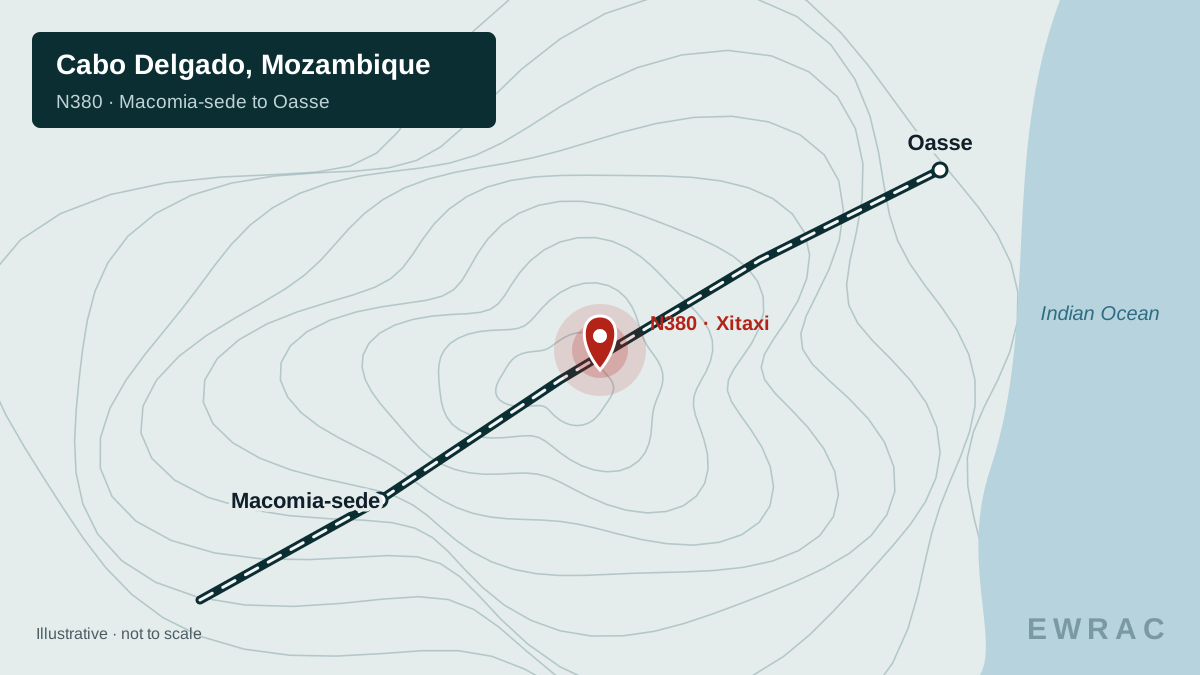
N380 · Cabo Delgado
Cabo Delgado's main supply road, running past Macomia towards the gas projects of the north. Islamic State Mozambique ambushes on convoys and travellers keep the road contested and raise the cost of every journey.
What we watch: Convoy ambushes, roadblocks, displacement along the route and the safety of supply lines.
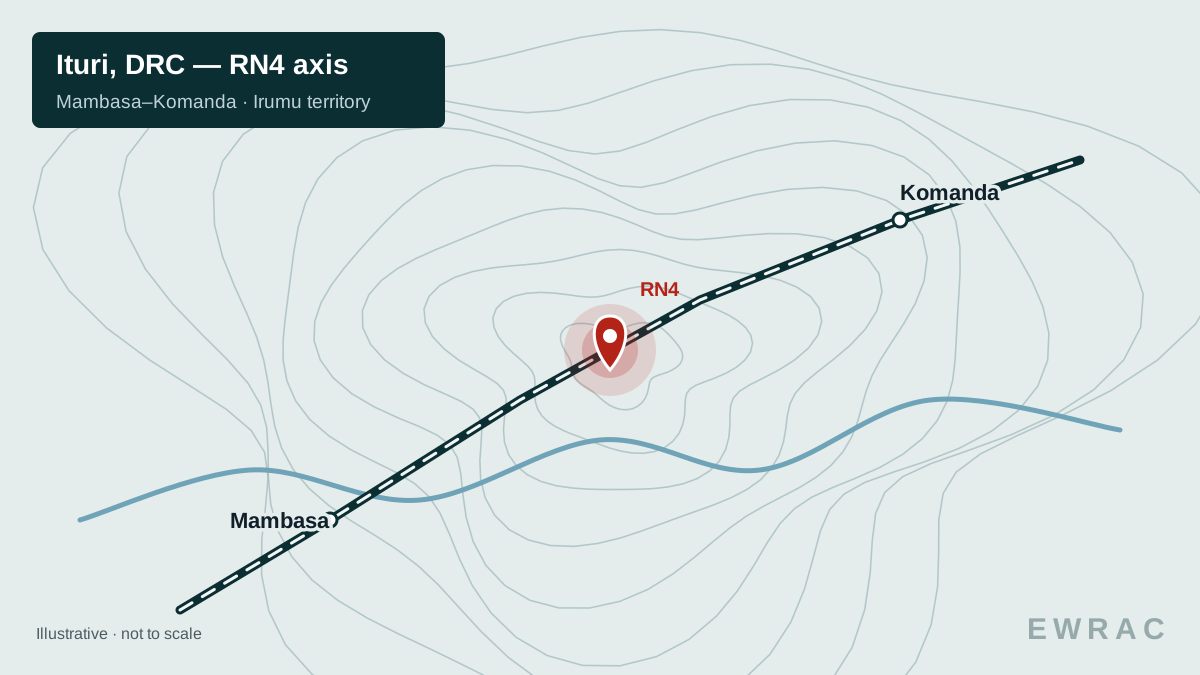
RN4 · Ituri
The national road linking Ituri's trading towns from Komanda to Mambasa and beyond. ISCAP (ADF) attacks, abductions and false alarms along it disrupt trade, cut off humanitarian access and empty whole communities.
What we watch: Mass abductions, attacks on travellers, panic and unrest in trading centres.
When a new route joins the watch
Corridors change. New roads, railways, ports and mining routes open, and armed groups follow the money. We add a route to the watch when it meets these tests:
- Economic weightThe route carries significant trade, minerals, energy or investment.
- Armed presenceArmed or criminal groups are active on or near the route.
- Incident trendAttacks, extortion or unrest along the route are rising.
- Community exposureCommunities along the route face displacement, recruitment or loss of livelihoods.
Routes that meet some of the tests go on an emerging watchlist first. Tell us about a route you think we should watch.
What we offer
From corridor risk to corridor resilience
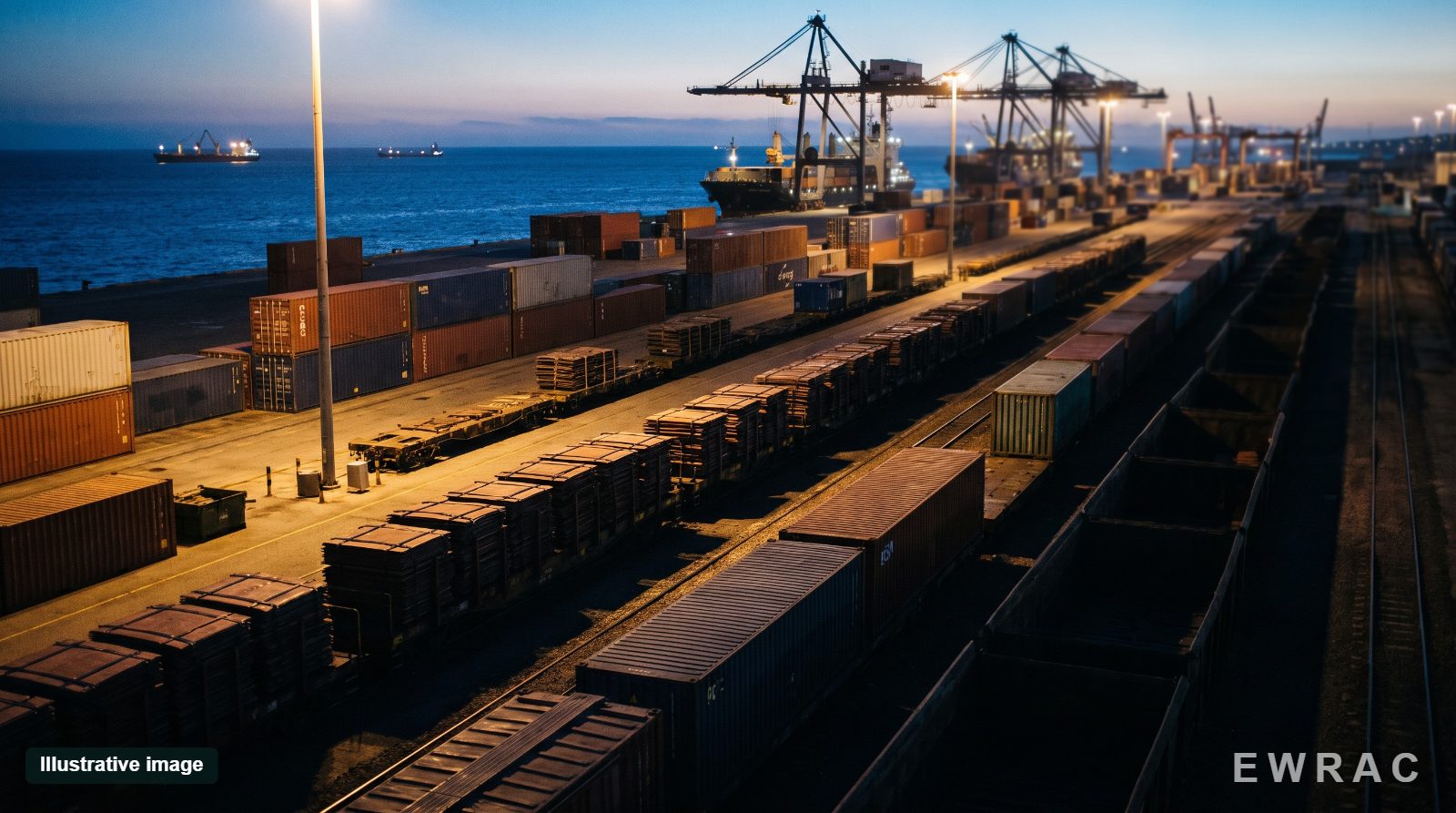
Ports, railways and highways carry the minerals, fuel and goods that the region's economies depend on. Keeping them open and safe protects jobs, investment and communities along the way.
Corridor threat assessments
Who controls what, where the risk is rising, and what it means for movement, trade and investment.
Early-warning alerts
Rapid alerts on attacks, roadblocks and unrest along the routes that matter to you.
Illicit-flow analysis
How minerals, fuel and money move along corridors and who profits from them.
Community resilience
Working with communities along the route so they can warn, protect and benefit.