N380 Military Convoy Attacked by Islamic State Mozambique (ISM)
Updated report on the armed attack attributed to Islamic State Mozambique targeting a military-escorted convoy along the N380 corridor in Macomia district, Cabo Delgado province.
The incident occurred near the village of V Congresso, Chai administrative post, as vehicles traveling under military escort on the Macomia–Awasse axis came under firearm unclaimed attack by IS-M. The attack resulted in two fatalities both adult males including the driver of one of the targeted vehicles. Several individuals were injured.
In addition to the casualties, assailants looted commercial goods transported in the trucks. Some of the attacked vehicles reportedly remained at the scene as of the morning of the 23rd, reflecting both the intensity of the ambush and limited immediate recovery capacity.
Following the incident, authorities temporarily suspended military escorts along the Macomia–Awasse route in both directions. This decision led to significant congestion of vehicles in the towns of Macomia and Awasse, disrupting trade flows and civilian mobility along one of the province’s most critical supply corridors.
Operational Implications
The temporary cancellation of escorts carries broader security and socio-economic consequences. The N380 is a strategic artery linking northern and central Cabo Delgado; interruptions reinforce perceptions of territorial contestation and insurgent freedom of movement. Prolonged suspension risks deepening local grievances, particularly among transporters and traders who depend on escorted convoys for safe passage.
There is also a growing perception among segments of the population that escorted movement prioritizes cargo or convoys associated with political or military interests over ordinary commercial activity. If unaddressed, such narratives may erode trust in state protection mechanisms and create exploitable information space for insurgent propaganda.
Strategically, the attack demonstrates continued insurgent capacity to interdict secured movement along key logistical routes, underscoring the need for adaptive convoy protection measures, route clearance operations, and enhanced area dominance beyond fixed escort models.
LOGISTICAL CONSTRAINTS HINDER EXPANSION OF THE LOCAL DEFENCE FORCE IN CABO DELGADO
On 21 February, the spokesperson of the Local Defence Force deployed in counter-terrorism operations in Cabo Delgado, Gabriel Cassimuca, stated in the district of Mueda that the force is facing significant constraints in expanding its presence across the province due to shortages of financial resources, material means, and food supplies.
The remarks were made during a food donation event promoted by the Secretary-General of FRELIMO, Chakil Aboobacar. On that occasion, Cassimuca reiterated that the Local Force intends to extend its operational footprint to southern districts such as Balama, Namuno, and Mecúfi areas considered strategically sensitive in light of the risk of insurgent infiltration and dispersion.
Despite these limitations, the Local Defence Force has maintained operational coordination with the Mozambican Defence and Security Forces (FDS), participating in joint patrols, stabilization efforts, and territorial control operations, particularly in zones previously affected by the Islamic State de Mozambique.
Beyond food shortages, the force has also raised concerns regarding the lack of adequate weaponry, communications equipment, transport assets, and irregularities in the disbursement of subsidies to its members many of whom are veterans of the liberation struggle, their descendants, and local volunteers.
In Mueda, a curfew imposed from 20:00 has been justified as a preventive security measure and is viewed as having contributed to maintaining stability in a town that has not experienced direct terrorist attacks since the onset of the insurgency.
ANALYSIS
The Local Defence Force has assumed responsibilities traditionally attributed to military and police structures, including access control, searches, preliminary detentions, and support to both offensive and defensive operations in coordination with the Mozambican Armed Defence Forces (FADM) and Rwandan contingents.
The visit of the President of the Republic, Daniel Chapo, to Mueda on 27 February 2025 reinforced political and institutional recognition of the Local Force, highlighting its legal framework and role in community-based territorial defence.
However, its long-term consolidation as a complementary security actor depends on deeper institutionalization, clearer mandates, operational discipline, and sustainable logistical support. The politicization of its activities could undermine internal cohesion and weaken strategic coordination with the FADM. In the context of a mobile and asymmetric insurgency, the effectiveness of the Local Defence Force remains directly linked to its structured integration within the national security architecture.
Driving Tangible Progress Against Terrorism
President Daniel Chapo stated that he expects to see and feel measurable progress in the fight against terrorism in Cabo Delgado during the official opening of the 2026 Military Operational Year.
The President commended the efforts of the Armed Forces and emphasized the need to reinforce protection of critical infrastructure, strategic natural resources, logistical and development corridors, the Mozambique Channel, as well as national air, land, and maritime domains. He framed these priorities as central pillars of military action in 2026, underscoring that national defense must directly safeguard the Mozambican people and the country’s long-term development trajectory.
“This year, we want to see and feel concrete progress in the fight against terrorism. Every soldier must recognize that they are an active participant in shaping the nation’s destiny, because the homeland is not an abstraction. It is our people. It is the future we are building together,” he stated.
President Chapo stressed that the Ministry of National Defense and the General Staff of the Armed Forces must treat counterterrorism as a strategic mission, ensuring that terrorism does not undermine Mozambique’s broader objective of achieving economic independence. At the same time, he cautioned against neglecting other dimensions of national security, calling for an integrated approach grounded in rigorous planning and disciplined execution.
He directed the Armed Forces of Mozambique (FADM) to define, stratify, and prioritize threats facing the state, placing counterterrorism at the top of the defense agenda while remaining attentive to other security challenges. As an example, he referenced Manica Province where the ceremony took place which has faced violent criminal activity by groups locally referred to as “homem catana,” (panga men) as well as increased influxes of individuals from various countries seeking gold exploitation opportunities.
ANALYSIS
“See and Feel” measurable progress in the fight against terrorism in Cabo Delgado. While the President’s intent reflects strategic urgency, the broader challenge extends beyond kinetic military success. Counterterrorism is not solely a task for the armed forces. Hard, purely kinetic approaches though necessary to neutralize immediate threats do not address structural drivers of radicalization. Mozambique has reached a point where progress depends significantly on political will to confront governance gaps, institutional weaknesses, and socioeconomic marginalization in Cabo Delgado.
The prolonged militarization of the conflict risks institutional fatigue and strategic dilution. When counterterrorism becomes normalized as a permanent condition, the threat gradually embeds into daily life, reducing national urgency and enabling adaptive insurgent tactics. In Cabo Delgado, many communities perceive the visible presence of armed force but limited parallel expansion of civilian state institutions focused on social equity, service delivery, and economic inclusion. This perception fosters alienation. Populations often feel trapped between insurgent coercion and military operations, weakening cooperation with security forces.
Large-scale economic projects in the Afungi basin and extractive sectors have intensified this perception. Communities frequently believe that military deployments prioritize protection of foreign investments rather than local livelihoods. Meanwhile, small-scale traders and transporters along corridors such as the N380 reportedly face taxation and looting by insurgent elements, with limited consistent protection. Where security presence is perceived as selective, grievances deepen.
Operationally, coordination gaps between the Mozambican Armed Forces (FADM), Rwandan forces, and Tanzanian elements in the Rovuma basin have complicated intelligence fusion and unified command structures. Fragmented external support and visibility competition among partners contributed to the withdrawal of the Southern African Development Community Mission in Mozambique, underscoring the difficulty of sustained regional alignment.
Reconstruction challenges persist in districts such as Macomia, affected by both insurgency and Cyclone Kenneth. Institutions including ADIN, INGD, INAS, and provincial state offices must demonstrate visible, equitable service delivery to rebuild trust. Ultimately, reversing Cabo Delgado’s trajectory requires a whole-of-state approach balancing calibrated military pressure with accountable governance, economic inclusion, and community-centered resilience. Without that balance, tactical gains risk strategic stagnation.
N380 Military Convoy Attacked by Islamic State Mozambique (ISM)
On February 22nd, three individuals sustained serious injuries, several others suffered minor injuries, and military vehicles and various food supplies were seized following an unclaimed armed attack by an attack-cell of ISM. The group conducted an armed armed ambush against military escort from Macomia to Auasse locality early Sunday afternoon.
The attack occurred around Quinto Congresso village, the administrative post of Chai, within the Macomia district. It resulted in both serious and minor injuries, which were subsequently treated by members of the Defense and Security Forces and transported to the Macomia-central hospital. Following the incident, Defense and Security forces launched a counter-offensive, leading to over thirty minutes exchanging gunfire. There are no reports of terrorists killed or wounded.
This ambush resulted in the closure of the national highway N380 until this Monday, February 23rd, date of this report. Local residents described heightened security presence and continued disruption to travel routes.
Witnesses reported that the ISM cell, operating with apparent agility, skillfully positioned themselves for the ambush, taking advantage of the relatively remote terrain surrounding the Quinto Congresso area. The attack highlights the ongoing security challenges faced by DSF in Cabo Delgado, where the ISM group has been terrorizing local communities and eroding the trust among government authorities and local residents.
The incident underscores the vulnerability of military convoys operating in the region and the need for continued vigilance and enhanced security measures. Authorities are on the circumstances surrounding the attack and assessing the group’s capabilities and intentions.
The closure of the highway continued to impact local trade and supply chains, raising concerns about the humanitarian situation in surrounding communities.
Further updates are expected as the DSF progresses with operations.
ISLAMIC STATE OF MOZAMBIQUE, KIDNAPS EIGHT INDIVIDUALS IN MOCÍMBOA DA PRAIA
Eight people, including two fishermen, were kidnapped in Mocímboa da Praia, Cabo Delgado, on Friday, October 20th, during an unclaimed armed attack by the Islamic State of Mozambique (IS-M). The group had been operating freely in the vicinity of Kitope and Anga communities since last thursday, reportedly targeting local residents.
Reports suggests that all eight victims, believed to be men, were likely recruited by the terrorists to assist in retrieving a stranded vessel along the coast or transporting their goods. EWRAC-HUMINT sources indicate that during Ramadan, the IS-M intensified their presence and movements, particularly in Mocímboa da Praia’s islands including Nhonge and Makulo, seeking food supplies.
Two weeks prior to this attack, the terrorists traveled to Anga village were forcibly purchased food from residents.
Residents describe a relatively normal life in Mocímboa da Praia despite ongoing challenges with basic services and infrastructure, although there is concern about potential collaboration between insurgents and the population, which could indicate the impending release of the hostages, as the group has not engaged in violence against civilians.
26 Corpses Recovered, ISCAP Triple Firearm Attack on Villages in Ituri
Security Analysis
Incident Overview
The recovery of 26 bodies following a coordinated triple firearm attack in Apakulo, Ahombo, and Mangwalo underscores the persistent insecurity in the Walese Vonkutu Chiefdom, Irumu Territory. The timing, scale, and lethality of the assault indicate a deliberate mass-casualty operation rather than an opportunistic act of violence.
Perpetrator Assessment
Although not officially claimed, the attack bears the hallmarks of the ISCAP, a group with a sustained operational footprint in the Irumu–Mambasa axis. The villages targeted lie within areas previously designated as high-risk due to ISCAP mobility and temporary encampments. The pattern aligns with ISCAP tactics of retaliatory or survival-driven violence when under military pressure.
Tactics, Techniques, and Procedures (TTPs)
- Simultaneous/near-simultaneous attacks on multiple villages suggest coordination and local reconnaissance using children as spotters (IS-Trend).
- Firearm-based assaults indicate access to small arms and an intent to maximize lethality while maintaining mobility.
- Targeting of remote, unsecured villages reflects a strategy of exploiting security gaps and intimidating civilian populations.
Operational Environment
The affected area’s dense rural terrain, proximity to the Ituri River, and closeness to the Mambasa border zone facilitate cross-river movement and evasion. Local administrator Colonel Siro Simba’s remarks confirm that ISCAP elements exploit these natural corridors to escape pressure from joint FARDC–UPDF operations, temporarily dispersing and reconstituting in less secured zones.
Impact on Civilian Security
The attack has intensified fear and displacement risks among local communities already constrained by restricted access and limited protection. The use of villages previously declared off-limits highlights the gap between threat designation and effective area denial or civilian protection.
Strategic Implications Outlook
Absent a reinforced and sustained security presence, including patrol density and territorial control, similar attacks remain likely in peripheral and riverine zones of Irumu. The incident demonstrates that ongoing military operations, while degrading ISCAP strongholds, have not yet eliminated the group’s capacity to conduct lethal attacks.
- Continued ISCAP mobility suggests insufficient area control and holding capacity after clearing operations.
- The violence risks undermining civilian confidence in state protection and may contribute to forced displacement or community self-defence dynamics.
Civilian authorities’ calls for reinforcement reflect an urgent need to shift from reactive operations to persistent stabilization and protection measures to mitigate further mass-casualty incidents.
Rwandan Forces Neutralise at Least 35 IS-Mozambique Insurgents in Northern Cabo Delgado
79° 58′ 56″ W
15 December 2025, Rwandan security forces operating in northern Mozambique neutralised at least 35 Islamic State of Mozambique (IS-M) insurgents during counter-insurgency operations across the districts of Macómia, Mocímboa da Praia, and Muidumbe. The operations were conducted in response to coordinated insurgent attacks along the N380 National Road, a critical logistics and mobility corridor linking key districts in Cabo Delgado.
The clashes resulted in the temporary closure of the N380 for several days, underscoring the continued ability of insurgent elements to disrupt strategic transport infrastructure despite sustained military pressure from Mozambican forces, the RDF, and bilateral partners. The targeting of the highway highlights the group’s enduring intent to undermine freedom of movement, economic activity, and security force redeployment in northern Cabo Delgado.
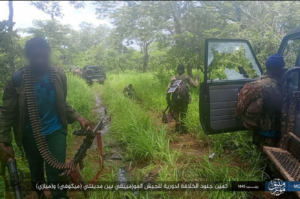
Ilustrative image
While the successful neutralisation of a significant number of insurgents reflects ongoing tactical effectiveness by Rwandan forces, the incidents also demonstrate the residual resilience and adaptability of IS-M, particularly its focus on ambushes and hit-and-run attacks along key supply routes. The N380 remains a high-value target for insurgents seeking to project relevance, impose economic costs, and challenge state and allied control.
The episode reinforces the need for sustained route-security operations, improved early-warning mechanisms, and enhanced civil–military coordination to prevent recurring disruptions along strategic corridors. It also highlights the importance of consolidating military gains through stabilisation and governance measures to deny insurgents the operational space necessary to regenerate.
Islamic State Claims Attack on Rwandan Naval Patrol in Mocímboa da Praia
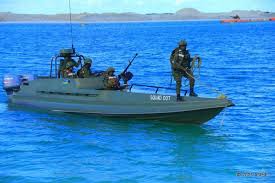
ilustrative image
Islamic State of Mozambique has claimed responsibility for an attack targeting a Rwandan Defence Force (RDF) naval patrol in the district of Mocímboa da Praia. 27 December 2025.
According to the claim, several RDF naval personnel were wounded during the engagement. The details of the incident, including casualty figures and the extent of damage, remain unverified.
The claimed attack is strategically significant, as it indicates IS-M’s continued intent to contest maritime and littoral security, particularly in coastal districts that are critical to supply routes, offshore access, and economic infrastructure. While much of Mocímboa da Praia town remains under government and bilateral forces control, surrounding coastal and riverine areas continue to present operational vulnerabilities.
From an analytical perspective, the incident underscores IS-M’s adaptive tactics, extending beyond land-based ambushes to harassment of naval patrols, potentially aimed at disrupting coastal surveillance and constraining freedom of movement for security forces. Such actions also carry a symbolic dimension, challenging narratives of stabilisation and demonstrating the group’s ability to operate across multiple domains.
If sustained, maritime-focused attacks could complicate counter-insurgency efforts by stretching security resources and increasing the protection burden for sea lines of communication, reinforcing the need for integrated land-sea intelligence coordination and early-warning mechanisms along Cabo Delgado’s coastline.
Islamic State Mozambique Road Ambush on 09 January 2026
On 09 January 2026, two civilians were wounded following a firearm attack by Islamic State of Mozambique (IS-M) militants targeting a civilian goods convoy along National Road 380 (N380). The incident occurred in the vicinity of Xitaxi, within the V Congresso locality, on the stretch linking Macomia-sede to the town of Oasse, Cabo Delgado Province.
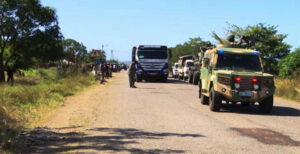
National Road 380 has remained a recurrent target of IS-M operations since October 2023. Notably, since August 2024. this current situation presents three concerning and interlinked scenarios;
- Economic Disruption and Market Vulnerability
The continued targeting of National Road 380 is likely to worsen the already fragile economic conditions in Mocímboa da Praia District. Recurrent road closures and the detention or seizure of goods disrupt supply chains, leading to shortages of essential commodities. This scarcity contributes directly to price inflation, reduced market equity, and increased hardship for local populations that depend on regular commercial flows for livelihoods and basic needs.
- Erosion of Confidence in State Security Provision
Despite the presence of Mozambique Defence Forces (FADM) escorts, the successful execution of the ambush highlights persistent security gaps along key transport corridors. Repeated attacks under such conditions risk eroding the confidence of traders, transporters, and civilians in the state’s ability to guarantee safe movement. This perception of insecurity may result in reduced commercial activity or the rerouting of trade away from affected areas.
- Expansion of IS-M Parallel Control Mechanisms
The weakening of trust in formal security arrangements may compel commercial transporters to seek alternative means of protection. In this context, the payment of “zakat” to IS-M previously observed along N380 may increasingly be viewed as a pragmatic option to ensure mobility and asset protection. This dynamic strengthens IS-M’s influence over economic corridors, reinforces its parallel governance structures, and further undermines state authority in northern Cabo Delgado.