U.S. Sanctions on the Rwanda Defense Force
On 2 March 2026, the U.S. Treasury’s Office of Foreign Assets Control (OFAC) imposed sanctions on the Rwanda Defence Force under Executive Order 13413, targeting General Vincent Nyakarundi, Major General Ruki Karusisi, General Mubarakh Muganga, and Brigadier Stanislas Gashugi. The designations were justified on the grounds that the RDF had materially supported the March 23 Movement in eastern Democratic Republic of the Congo through military assistance, operational coordination, and logistical backing. By sanctioning both the institution and senior commanders, the United States signaled that the alleged involvement was not viewed as isolated battlefield cooperation but as part of a structured military posture toward the conflict in eastern Congo.
The immediate catalyst for the sanctions was the seizure of Uvira by M23 forces, an event that occurred shortly after the signing of the Washington Accords between Félix Tshisekedi and Paul Kagame. From Washington’s perspective, the offensive represented a direct contradiction of the diplomatic framework intended to de-escalate fighting in North and South Kivu. Intelligence presented to the United Nations Security Council suggested that between 5,000 and 7,000 Rwandan troops had operated in eastern Congo alongside M23 units, supported by advanced military capabilities including drones, artillery systems, air defence assets, and electronic warfare equipment such as GPS-jamming technology.
The deeper structural driver of the conflict lies in the strategic value of eastern Congo’s mineral belt. Territories around Goma and Bukavu contain significant deposits of coltan, gold, cassiterite, and other critical minerals that feed global supply chains for electronics and energy technologies. Control of these areas therefore provides both economic leverage and political influence. While Kigali frames its security posture as a defensive measure against the FARDC for the Liberation of Rwanda operating in eastern Congo, Western intelligence assessments increasingly view the relationship between Rwanda and M23 through a broader lens that includes access to resource corridors and regional strategic positioning.
Sanctioning the RDF as an institution carries implications that extend beyond diplomatic signaling. Rwanda’s defence establishment maintains procurement relationships with a diverse network of international suppliers, including Israeli, Turkish, South African, and European defence industries. Financial restrictions imposed through the U.S. sanctions regime introduce systemic risk across procurement financing, international banking channels, and defence partnerships. Additionally, Rwanda is one of Africa’s largest contributors to UN peacekeeping missions and reportedly receives more than $100 million annually in reimbursements. Institutional sanctions therefore create potential pressure points within Rwanda’s defence financing architecture.
The strategic question now confronting policymakers is whether these sanctions will meaningfully alter Kigali’s cost-benefit calculation in eastern Congo. If Rwanda perceives that the strategic benefits derived from influence in the mineral-rich borderlands outweigh the financial and diplomatic costs imposed by sanctions, the conflict dynamics may remain unchanged.
However, if institutional exposure across procurement networks, financial flows, and international partnerships begins to accumulate, the sanctions could function as coercive leverage within ongoing diplomatic frameworks aimed at stabilizing eastern DRC.
Legacy War Ordnance in Lake Victoria Raises Modern Terrorism and Security Risks
The discovery of approximately twenty live explosive projectiles in Lake Victoria near Mbita Point raises broader security and governance concerns for the states surrounding the lake. Given the well-documented military history of the region during the Second World War, the presence of unexploded ordnance should not be entirely unexpected.
The Lake Victoria basin, particularly around former logistics hubs such as Kisumu and nearby transit routes, served as an operational corridor for Allied forces. Numerous aircraft accidents involving military cargo occurred in the lake, and historical records confirm that weapons, ammunition, and other military equipment were lost during these incidents. From a risk management perspective, areas with such a concentration of wartime activity should long ago have been designated for systematic underwater screening and ordnance clearance operations.
The absence of comprehensive surveys increases the likelihood that additional military materials remain on the lakebed, posing a continuing hazard to civilian communities that depend on fishing and transport. Beyond the safety risks to fishermen and lakeside populations, the discovery also carries implications in the context of contemporary security threats.
Armed extremist groups often emerge from local communities and are typically familiar with the historical narratives, geography, and hidden resources within their operational environments. It is therefore plausible that individuals within extremist or criminal networks are aware that the lakebed may contain remnants of military equipment from past conflicts. Such knowledge could potentially motivate attempts to recover or exploit these materials.
Militant organizations operating in the broader region, particularly those linked to the Islamic State affiliates, have significantly refined their use of improvised explosive devices. Both the ISCAP in eastern Democratic Republic of Congo and the IS-M insurgency in Cabo Delgado have repeatedly demonstrated the ability to construct effective IEDs using a range of available explosive materials. In both theatres, military convoys and security patrols have been targeted with explosive devices designed to maximize disruption and casualties.
In this context, the existence of military-grade explosive remnants within Lake Victoria raises an important strategic question. To what extent might such submerged munitions already have been recovered, repurposed, or integrated into clandestine supply chains supporting terrorism or criminal activities without detection?
The key concern is not only the discovery itself, but the uncertainty surrounding how much ordnance may still remain submerged and unaccounted for. Without systematic underwater surveys and coordinated regional monitoring, it is difficult to determine whether such materials have already been recovered in the past without detection.
For the governments bordering Lake Victoria, this incident highlights the importance of proactive security measures that combine historical awareness with contemporary counterterrorism risk assessment. Comprehensive mapping of suspected crash sites, underwater ordnance clearance operations, and coordinated intelligence sharing between Kenya, Tanzania, and Uganda would significantly reduce the risk that legacy wartime materials could be diverted into modern insurgent or criminal supply chains.
In a region where extremist organizations have already demonstrated growing expertise in explosive warfare, even small quantities of recovered military ordnance could have disproportionate operational consequences if exploited.
Discovery of Live Explosive Ordnance in Lake Victoria Raises Historical and Security Concerns
On 2 March 2026, approximately twenty live explosive projectiles were discovered in the waters of Lake Victoria near Litare Beach in Mbita Point, Kenya. The devices were recovered by local fishermen who initially believed they had caught a large fish but later realized the object was a container holding explosive ordnance and ammunition. Police and security authorities were immediately notified and subsequently secured the area, removing the hazardous materials for technical assessment. Preliminary identification suggests the devices are highly explosive projectiles weighing approximately 1.1 kilograms each, believed to be ammunition British PIAT’s (Projector, Infantry, Anti-Tank) weapon system used by Commonwealth forces during the Second World War.
The discovery occurred in a geographically sensitive section of Lake Victoria that connects Kenyan fishing communities with nearby Tanzanian waters around Musoma, Tamire, and Mfangano Island, as well as maritime routes used by Ugandan fishermen. The lake functions as a major regional economic corridor where thousands of small vessels operate daily for fishing and informal cross-border trade. The unexpected recovery of live explosives therefore generated immediate concern among local communities and authorities due to the potential danger posed by unexploded ordnance in an area of intense civilian activity.
Historical context suggests that the presence of such munitions in Lake Victoria may be linked to wartime military activity in East Africa during the Second World War. During that period, the region surrounding the lake served as an important logistical corridor for Allied forces operating across the East African theater. The Royal Air Force base in Kisumu played a central role as a staging and transit hub where aircraft, military personnel, and weapons were moved between operational fronts and supply depots across the British Empire.
Several Allied squadrons operated from Kisumu, including ferry squadrons responsible for transporting aircraft and military equipment across long-distance routes. The base also hosted South African Air Force units, including No. 2 Squadron, known as the “Flying Cheetahs,” which conducted aerial operations against Italian forces during the East African campaign. The movement of military cargo through the base included weapons, ammunition, and other logistical supplies destined for operational units in Africa and beyond.
Historical aviation records show that several aircraft carrying personnel and military cargo crashed in or near Lake Victoria during this period. 19 December 1941, a Lockheed Lodestar aircraft operated by the South African Air Force crashed into the lake shortly after departing the Royal Air Force station in Kisumu while en route to Johannesburg. The crash killed all personnel on board, including Major General Daniel Hermanus Pienaar and several senior officers. The aircraft’s cargo was lost in the lake.
Additional incidents occurred during the final months of the war. 11 May 1945, a Douglas C-47A aircraft transporting weapons from the United Kingdom to the South African Air Force base at Waterkloof in Pretoria crashed into Lake Victoria shortly after takeoff from Kisumu. While the two pilots survived, the passenger drowned and the cargo of military equipment was never recovered. July 1945, two further aviation disasters occurred in the same region, including the crash of a Royal Air Force Consolidated Catalina flying boat during landing operations and another South African Air Force Douglas C-47A that crashed near Rusinga Island, killing all twenty-eight individuals on board. The weapons and supplies being transported in these aircraft were also lost in the lake.
Given these historical incidents, it is plausible that the explosive projectiles recently recovered by fishermen formed part of wartime cargo lost during one of these aircraft crashes or were disposed of in the lake following the end of the conflict. Some historical accounts also suggest that additional weapons may have been discarded in the lake as surplus military stock or lost during clandestine cross-lake movements by insurgent groups in later decades.
Although the devices appear to be legacy munitions dating from the Second World War, the discovery highlights the continuing risks associated with unexploded ordnance in historically militarized environments. Lake Victoria remains one of the most active inland waterways in Africa, supporting dense fishing activity and informal maritime traffic between Kenya, Tanzania, and Uganda. The presence of unexploded explosives in such an environment presents both a public safety risk and a potential security concern should such materials be recovered and misused by criminal actors.
For regional authorities, the incident underscores the need for coordinated monitoring and potential underwater surveys to determine whether additional unexploded ordnance remains scattered within the lakebed. Cooperation between Kenyan, Tanzanian, and Ugandan maritime and security agencies may therefore be necessary to ensure that similar discoveries do not pose a continuing threat to local populations and economic activity across the Lake Victoria basin.
ISCAP Intensifies Operations in Ituri and North Kivu, Forcing Strategic Reset
The resurgence of violence attributed to the Islamic State Central Africa Province (ISCAP) in southern Irumu, Ituri province, is generating a cascading security and economic crisis that now compels both provincial and national authorities to recalibrate their counterinsurgency posture. ISCAP has evolved into a more structured insurgent actor, capable of synchronizing attacks, sustaining cross-border mobility, and leveraging economic disruption as a weapon of war.
In the Bandavilemba area of southern Irumu, agriculture the backbone of the local economy has nearly collapsed. Persistent raids and targeted killings have forced farmers to abandon their land, sharply reducing bean production and other staple crops. Even when limited harvests are secured, insecurity along feeder roads prevents access to markets. The recent attack in Butani village, marked by the burning of three motorcycles and violence against civilians, reinforced a climate of terror. Trade routes are fractured, shops operate at reduced capacity, and liquidity has contracted. Southern Irumu is not only insecure; it is undergoing progressive economic asphyxiation, with early indicators of localized food stress.
This deterioration forms the operational backdrop to the Provincial Forum convened in Beni, North Kivu, under the initiative of Governor General Evariste Kakule Somo. On its session on February 23, the National Assembly Speaker Aimé Boji Sangara framed the forum as a decisive step toward durable stabilization. Deputy Chief of Staff of the FARDC for Operations and Intelligence, highlighted the heavy toll over 2,600 soldiers killed since 2014 and stressed that multidimensional operations must supersede purely kinetic responses.
The forum consolidated a coalition framework involving the FARDC, the Uganda People’s Defence Force (UPDF), the Congolese National Police, and MONUSCO. Ambassador Roxane de Bilderling emphasized synchronized military, civil society, and diplomatic engagement, while MONUSCO representatives underscored the centrality of human intelligence in pre-empting ISCAP maneuver.
The strategic implication is clear: without restoring sustained territorial control and rebuilding civilian confidence in Irumu and Beni, tactical victories will remain reversible. ISCAP’s operational model combining asymmetric violence, economic strangulation, and psychological coercion requires integrated security governance, protected economic corridors, intelligence-led operations, and durable regional coordination to prevent deeper destabilization of eastern DRC.
Three FARDC soldiers killed in Ituri
Three soldiers of the Armed Forces of the Democratic Republic of the Congo (FARDC) were killed during a claimed firearm attack against a military camp in  , Ituri province, on 25 February.
According to reports attributed to the Islamic State Central Africa Province, the assailants launched a direct assault on the position, resulting in the deaths of three FARDC personnel. During the attack, the group reportedly seized two rifles before withdrawing from the area.
The incident reflects a continued pattern of targeting lightly fortified military outposts in Ituri, enabling insurgents to capture weapons and ammunition to sustain their operational tempo. Even limited arms seizures contribute incrementally to strengthening militant capabilities while simultaneously exposing vulnerabilities in fixed defensive positions and force protection measures in remote deployment zones.
Two FARDC Soldiers killed in Ituri
Two soldiers of the Armed Forces of the Democratic Republic of the Congo (FARDC) were killed during a claimed terrorist attack against a military camp in Sisa, Ituri province, on 26 February.
According to reports attributed to the Islamic State Central Africa Province, the assailants overran the position, killed two FARDC personnel, and seized three rifles along with quantities of ammunition. The military camp was subsequently set ablaze before the attackers withdrew.
Beyond the immediate casualties, the destruction of the camp and capture of weapons represent both a symbolic and material gain for the attackers. Such operations are designed to degrade forward defensive positions, replenish insurgent arsenals, and project operational reach in contested zones of Ituri. The targeting of fixed installations also underscores the vulnerability of lightly fortified outposts in remote areas, where rapid reinforcement and sustained perimeter defense remain operational challenges for FARDC forces.
Five Defense and Security Forces Killed in Novo Congresso
A total of five members of the Defense and Security Forces (DSF), comprising Mozambican and Rwandan personnel, were killed during a claimed double firearm attack carried out by Islamic State Mozambique in Novo Congresso, Macomia district, on 24 and 26 February.
The coordinated nature of the incidents suggests deliberate targeting of joint security patrols operating in the area. Following the attacks, sensitive images were circulated online by IS-M-affiliated channels, purportedly depicting the aftermath, though without additional operational details. The dissemination of such imagery forms part of the group’s psychological warfare strategy, aimed at amplifying impact, undermining morale, and projecting continued operational capability.
President Daniel Chapo Calls for Disruption of Terrorist Maritime Supply Lines
The President of the Republic of Mozambique and Commander-in-Chief of the Defence and Security Forces (FDS), Daniel Chapo, has called for the immediate disruption of terrorist logistical supply lines and greater operational dynamism in combating criminality through innovative strategies aimed at strengthening national security.
Addressing Rear Admiral Estevão Bernardo Nchokomala, newly appointed Commander of the Mozambique Navy, the President underscored the Navy’s central role in safeguarding national sovereignty, territorial integrity, and the protection of Mozambique’s extensive coastline. He highlighted responsibilities including maritime resource protection, security of navigation routes, and the fight against transnational threats such as terrorism, maritime piracy, human trafficking, drug trafficking, arms smuggling, and organized crime.
Within the framework of counterterrorism operations in Cabo Delgado, the Mozambique Navy is expected to assume a decisive role in coastal surveillance, maritime domain control, joint operations support, and, critically, the disruption of logistical supply routes sustaining terrorist elements.
The President stressed that effective maritime domain control is now a determining factor for the success of broader stabilization, pacification, and sustainable development strategies in Cabo Delgado and the country at large.
Blocking IS-M Maritime Logistics
For the newly appointed commandant, neutralizing the maritime logistical corridors used by Islamic State Mozambique requires a shift from reactive patrol patterns to intelligence-driven maritime interdiction.
IS-M has historically exploited Mozambique’s porous northern coastline, informal landing sites, mangrove estuaries, and fishing networks to move personnel, weapons, fuel, and supplies between coastal districts and offshore points. Small dhows and artisanal fishing vessels provide low-signature transport, complicating detection through conventional naval patrols.
To effectively block these routes, the Navy must integrate layered maritime domain awareness: coastal radar coverage, automatic identification systems (AIS) enforcement, drone-based ISR, and human intelligence penetration of coastal communities. Joint littoral operations with marine units and rapid-reaction forces are essential to interdict landing points rather than merely patrol open waters, which as long proven impossible.
Additionally, disrupting financial flows tied to maritime smuggling, fuel diversion, illicit timber, and narcotics will weaken IS-M’s logistical resilience. Cooperation with regional partners in the SADC, SADC SO such Regional Early Warning Centre and Regional Counter Terrorism Centre is equally critical, given cross-border movement through Tanzanian corridor and Indian Ocean corridors.
Failure to secure these maritime arteries risks allowing IS-M to retain operational depth, resupply capacity, and tactical mobility. Conversely, sustained maritime interdiction would significantly constrain insurgent endurance and recalibrate the operational balance in Cabo Delgado.
M23 Rebel Group Spokesperson Willy Ngoma Killed in North Kivu Drone Strike
The Use of Drones in DRC
February 24, the spokesperson of the M23 rebel group, Willy Ngoma, was reportedly killed in a drone strike conducted by the Armed Forces of the Democratic Republic of Congo (FARDC) in Rubaya, North Kivu. The strike occurred at approximately 3:00 a.m. in Rubaya, a town of major strategic importance due to its coltan mines, which account for an estimated 15 per cent of global supply. The operation reportedly followed several days of sustained drone activity in the area.
Ngoma’s reported death comes amid the implementation of a Qatar-mediated ceasefire between Kinshasa and M23, including the establishment of a joint monitoring and verification mechanism supported by observers from Qatar, the United States, and the African Union. Although M23 has not formally confirmed his death, statements from another M23 spokesperson, Lawrence Kanyuka, acknowledged the drone strikes, indirectly reinforcing the operational context of the incident.
Drone Usage in the Democratic Republic of Congo
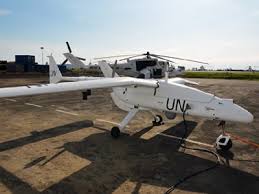
Drone deployment in the Democratic Republic of Congo has evolved significantly over the past two decades. Initial use dates back to 2006, when European forces and Belgian troops introduced surveillance drones in Kinshasa to support the UN mission. That early phase was halted after one drone was shot down and another crashed into a civilian house.
December 2013, MONUSCO formally integrated surveillance drones as a mission asset, deploying five Falco EVO drones in Goma to monitor border areas and track armed groups such as M23. From 2019 onward, humanitarian actors including VillageReach and Swoop Aero began medical drone trials in Équateur province, with routine deliveries expanding in 2021 under the Drones for Health program across more than 22,000 square kilometers.
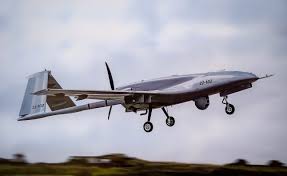
From late 2023 to early 2025, FARDC significantly accelerated its drone capabilities, acquiring Turkish Bayraktar TB2 systems and Chinese Wing Loong II platforms. These acquisitions enhanced precision-strike capacity and real-time intelligence gathering in areas such as Masisi, Walikale, Rutshuru, Lubero, Kalehe, Mwenga, and Minembwe.
Warfare Transformation and Rebel Adaptation
The Congo River Alliance (AFC), a coalition that includes M23, has reportedly deployed kamikaze drones in offensive operations, including the attack on Kisangani Bangoka International Airport in northeastern DRC. The AFC/M23 claimed responsibility for strikes conducted between January 31 and February 1, targeting a FARDC military command center coordinating operations against AFC/M23 positions in occupied areas.
Reports indicate the use of more than ten kamikaze drones in a single coordinated attack, signaling a doctrinal shift toward asymmetric aerial warfare. There are also reports suggesting that the Islamic State Central Africa Province (ISCAP) is operating in areas from Ituri to South Kivu, particularly in resource-rich zones, and may be adapting similar drone-based tactics.
Islamic State affiliated groups increasingly utilize commercial and modified drones for reconnaissance, propaganda, and weaponized attacks. This trend, observed in other African theaters such as the Lake Chad Basin, reflects a broader tactical evolution. Should such capabilities expand further in eastern DRC and diffuse into the SADC region, including Mozambique, the operational environment will shift substantially. The weaponization of drones by insurgent actors has the potential to intensify attacks on military camps, infrastructure, and civilian settlements, thereby complicating stabilization efforts and eroding state authority in contested territories.
On Sunday the 22nd, two individuals were reportedly kidnapped during an unclaimed armed ambush along the N380 corridor round Nova Zambeze village, on the Pemba–Mueda route in Cabo Delgado province. A ransom payment of 200,000 meticais was demanded from the transport company.
The incident occurred when suspected IS-M attack cell carried out an unclaimed armed ambush targeting a cement truck traveling northbound. According to available information, the attack appeared deliberate and selective, the truck was singled out, while other vehicles were reportedly allowed to pass without interference. The assailants forced the driver to stop under gunfire and demanded payment as a condition for the release of the vehicle, cargo, and detained individuals. No fatalities were confirmed.
IMPLICATIONS AND ANALYSIS
The N380 remains a strategic supply artery connecting coastal Pemba to inland districts such as Mueda, supporting both commercial distribution and security deployments. The precision of the targeting amid reports that other motorists accelerated through the area to avoid interception raises concerns about prior intelligence gathering. The selective nature of the ambush suggests potential pre-attack surveillance or the use of spotters positioned along transit nodes such as fuel stations, checkpoints, or commercial loading points.
Although the attack has not been claimed, it contributes to a broader pattern of coercive disruption along Cabo Delgado’s Road network. Such operations blur the line between insurgent activity and organized criminality, generating revenue through ransom and intimidation while undermining confidence in state protection mechanisms. Recurrent interdictions along secondary and non-escorted routes indicate persistent gaps in area dominance beyond fixed convoy protection models.
Importantly, this incident follows the 23rd attack along the Macomia–Awasse axis, after which authorities temporarily suspended military escorts in both directions. The suspension created congestion, disrupted trade flows, and heightened anxiety among transport operators. When escorts are withdrawn even temporarily it signals contested control of key corridors and provides armed groups with greater operational latitude. The cumulative effect is increased transport costs, supply delays, and the normalization of risk premiums along the N380 and adjacent routes.

If escort suspensions persist or are perceived as inconsistent, commercial actors may resort to informal protection arrangements or adjust movement patterns in ways that further weaken centralized security control. Strategically, the combination of targeted ambushes and forced escort suspensions amplifies insurgent leverage, reinforcing narratives of state vulnerability while expanding opportunities for coercive taxation and kidnapping along critical logistical corridors.