The resurgence of violence attributed to the Islamic State Central Africa Province (ISCAP) in southern Irumu, Ituri province, is generating a cascading security and economic crisis that now compels both provincial and national authorities to recalibrate their counterinsurgency posture. ISCAP has evolved into a more structured insurgent actor, capable of synchronizing attacks, sustaining cross-border mobility, and leveraging economic disruption as a weapon of war.
In the Bandavilemba area of southern Irumu, agriculture the backbone of the local economy has nearly collapsed. Persistent raids and targeted killings have forced farmers to abandon their land, sharply reducing bean production and other staple crops. Even when limited harvests are secured, insecurity along feeder roads prevents access to markets. The recent attack in Butani village, marked by the burning of three motorcycles and violence against civilians, reinforced a climate of terror. Trade routes are fractured, shops operate at reduced capacity, and liquidity has contracted. Southern Irumu is not only insecure; it is undergoing progressive economic asphyxiation, with early indicators of localized food stress.
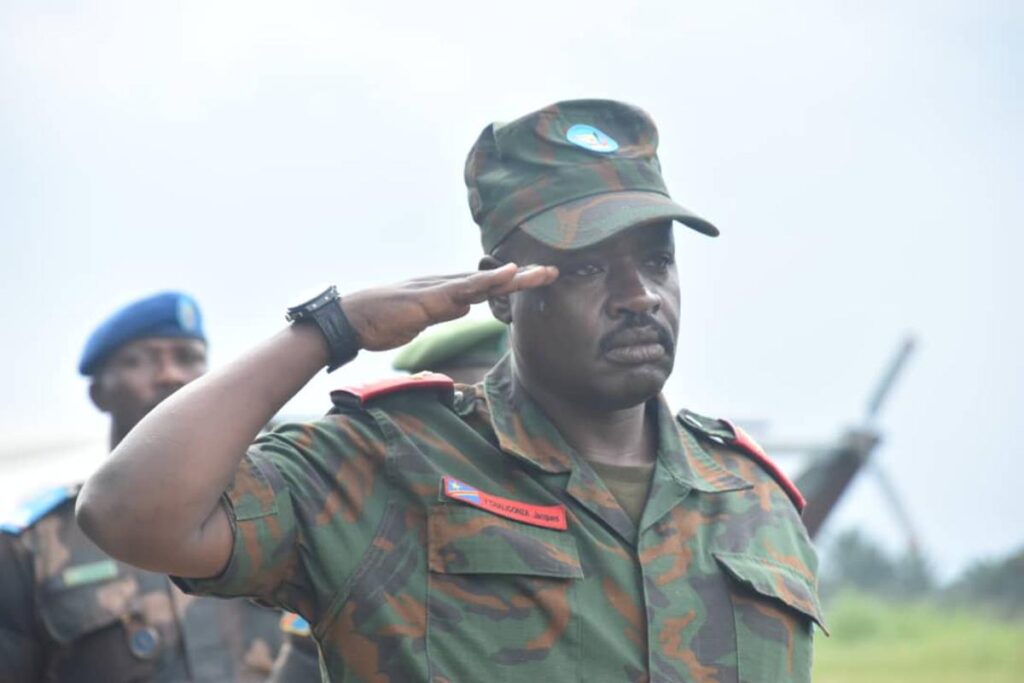
This deterioration forms the operational backdrop to the Provincial Forum convened in Beni, North Kivu, under the initiative of Governor General Evariste Kakule Somo. On its session on February 23, the National Assembly Speaker Aimé Boji Sangara framed the forum as a decisive step toward durable stabilization. Deputy Chief of Staff of the FARDC for Operations and Intelligence, highlighted the heavy toll over 2,600 soldiers killed since 2014 and stressed that multidimensional operations must supersede purely kinetic responses.
The forum consolidated a coalition framework involving the FARDC, the Uganda People’s Defence Force (UPDF), the Congolese National Police, and MONUSCO. Ambassador Roxane de Bilderling emphasized synchronized military, civil society, and diplomatic engagement, while MONUSCO representatives underscored the centrality of human intelligence in pre-empting ISCAP maneuver.
The strategic implication is clear: without restoring sustained territorial control and rebuilding civilian confidence in Irumu and Beni, tactical victories will remain reversible. ISCAP’s operational model combining asymmetric violence, economic strangulation, and psychological coercion requires integrated security governance, protected economic corridors, intelligence-led operations, and durable regional coordination to prevent deeper destabilization of eastern DRC.