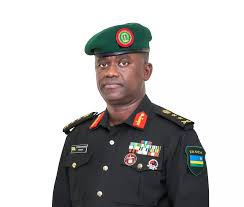
On 2 March 2026, the U.S. Treasury’s Office of Foreign Assets Control (OFAC) imposed sanctions on the Rwanda Defence Force under Executive Order 13413, targeting General Vincent Nyakarundi, Major General Ruki Karusisi, General Mubarakh Muganga, and Brigadier Stanislas Gashugi. The designations were justified on the grounds that the RDF had materially supported the March 23 Movement in eastern Democratic Republic of the Congo through military assistance, operational coordination, and logistical backing. By sanctioning both the institution and senior commanders, the United States signaled that the alleged involvement was not viewed as isolated battlefield cooperation but as part of a structured military posture toward the conflict in eastern Congo.
The immediate catalyst for the sanctions was the seizure of Uvira by M23 forces, an event that occurred shortly after the signing of the Washington Accords between Félix Tshisekedi and Paul Kagame. From Washington’s perspective, the offensive represented a direct contradiction of the diplomatic framework intended to de-escalate fighting in North and South Kivu. Intelligence presented to the United Nations Security Council suggested that between 5,000 and 7,000 Rwandan troops had operated in eastern Congo alongside M23 units, supported by advanced military capabilities including drones, artillery systems, air defence assets, and electronic warfare equipment such as GPS-jamming technology.
The deeper structural driver of the conflict lies in the strategic value of eastern Congo’s mineral belt. Territories around Goma and Bukavu contain significant deposits of coltan, gold, cassiterite, and other critical minerals that feed global supply chains for electronics and energy technologies. Control of these areas therefore provides both economic leverage and political influence. While Kigali frames its security posture as a defensive measure against the FARDC for the Liberation of Rwanda operating in eastern Congo, Western intelligence assessments increasingly view the relationship between Rwanda and M23 through a broader lens that includes access to resource corridors and regional strategic positioning.
Sanctioning the RDF as an institution carries implications that extend beyond diplomatic signaling. Rwanda’s defence establishment maintains procurement relationships with a diverse network of international suppliers, including Israeli, Turkish, South African, and European defence industries. Financial restrictions imposed through the U.S. sanctions regime introduce systemic risk across procurement financing, international banking channels, and defence partnerships. Additionally, Rwanda is one of Africa’s largest contributors to UN peacekeeping missions and reportedly receives more than $100 million annually in reimbursements. Institutional sanctions therefore create potential pressure points within Rwanda’s defence financing architecture.
The strategic question now confronting policymakers is whether these sanctions will meaningfully alter Kigali’s cost-benefit calculation in eastern Congo. If Rwanda perceives that the strategic benefits derived from influence in the mineral-rich borderlands outweigh the financial and diplomatic costs imposed by sanctions, the conflict dynamics may remain unchanged.
However, if institutional exposure across procurement networks, financial flows, and international partnerships begins to accumulate, the sanctions could function as coercive leverage within ongoing diplomatic frameworks aimed at stabilizing eastern DRC.