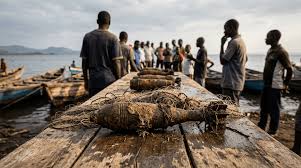
The discovery of approximately twenty live explosive projectiles in Lake Victoria near Mbita Point raises broader security and governance concerns for the states surrounding the lake. Given the well-documented military history of the region during the Second World War, the presence of unexploded ordnance should not be entirely unexpected.
The Lake Victoria basin, particularly around former logistics hubs such as Kisumu and nearby transit routes, served as an operational corridor for Allied forces. Numerous aircraft accidents involving military cargo occurred in the lake, and historical records confirm that weapons, ammunition, and other military equipment were lost during these incidents. From a risk management perspective, areas with such a concentration of wartime activity should long ago have been designated for systematic underwater screening and ordnance clearance operations.
The absence of comprehensive surveys increases the likelihood that additional military materials remain on the lakebed, posing a continuing hazard to civilian communities that depend on fishing and transport. Beyond the safety risks to fishermen and lakeside populations, the discovery also carries implications in the context of contemporary security threats.
Armed extremist groups often emerge from local communities and are typically familiar with the historical narratives, geography, and hidden resources within their operational environments. It is therefore plausible that individuals within extremist or criminal networks are aware that the lakebed may contain remnants of military equipment from past conflicts. Such knowledge could potentially motivate attempts to recover or exploit these materials.
Militant organizations operating in the broader region, particularly those linked to the Islamic State affiliates, have significantly refined their use of improvised explosive devices. Both the ISCAP in eastern Democratic Republic of Congo and the IS-M insurgency in Cabo Delgado have repeatedly demonstrated the ability to construct effective IEDs using a range of available explosive materials. In both theatres, military convoys and security patrols have been targeted with explosive devices designed to maximize disruption and casualties.
In this context, the existence of military-grade explosive remnants within Lake Victoria raises an important strategic question. To what extent might such submerged munitions already have been recovered, repurposed, or integrated into clandestine supply chains supporting terrorism or criminal activities without detection?
The key concern is not only the discovery itself, but the uncertainty surrounding how much ordnance may still remain submerged and unaccounted for. Without systematic underwater surveys and coordinated regional monitoring, it is difficult to determine whether such materials have already been recovered in the past without detection.
For the governments bordering Lake Victoria, this incident highlights the importance of proactive security measures that combine historical awareness with contemporary counterterrorism risk assessment. Comprehensive mapping of suspected crash sites, underwater ordnance clearance operations, and coordinated intelligence sharing between Kenya, Tanzania, and Uganda would significantly reduce the risk that legacy wartime materials could be diverted into modern insurgent or criminal supply chains.
In a region where extremist organizations have already demonstrated growing expertise in explosive warfare, even small quantities of recovered military ordnance could have disproportionate operational consequences if exploited.