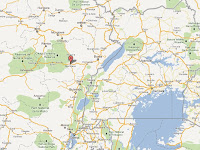
As a result of coordinated ISCAP (ADF) attacks, more than three hundred (300) civilians were abducted and several others killed during large-scale incursions along the Mambasa–Komanda axis (RN4), in Irumu territory, Ituri, between March 28 and 29, 2026. The attacks began in Babungwe village, where approximately one hundred (100) civilians, primarily farmers, were taken hostage. On the following day, the group expanded operations into Lomalisa, capturing over two hundred (200) additional civilians, before extending attacks up to Mabukulu and Masoli. According to EWRAC local sources, the total number of abducted civilians may reach three hundred and eighty-eight (388), indicating a coordinated and high-volume hostage-taking operation that triggered widespread panic and displacement along NR4.
Counterterrorism operation
At the time of reporting, no immediate large-scale military response had been confirmed, although civil society actors have called for urgent offensive operations to secure the RN4 corridor and rescue hostages. Authorities have acknowledged the situation and indicated that a formal response is forthcoming. The continued presence of ISCAP elements in the Bakwanza forest, a known staging ground along the RN4 axis, suggests that the group retains freedom of movement and operational depth in the area.
Analysis and prognosis
This incident represents a significant escalation in ISCAP’s operational model, shifting toward mass abduction as a strategic tool for coercion, recruitment, and control. The scale and coordination of the attacks indicate strong local intelligence, mobility, and the ability to operate simultaneously across multiple points. The RN4 corridor emerges as a critical vulnerability, where the absence of sustained area control enables repeated incursions. Without immediate, intelligence-driven operations and permanent security deployment along this axis, ISCAP is likely to retain hostages, conduct executions, and reinforce its authority, further destabilizing Irumu and the wider Ituri region.