Five Rwandan soldiers were killed, two wounded – ISM Claims Attack
Islamic State of Mozambique has claimed responsibility for a firearm ambush targeting a convoy of the Rwandan Defence Force (RDF) in Namigure, Macomia District, on 29 December 2025.
According to the group’s claim, five Rwandan soldiers were killed, two wounded, and several weapons seized during the attack. The incident reportedly occurred on National Road NR380 connecting Macómia and Mocímboa da Praia, areas that remain strategically significant despite sustained counter-insurgency operations.
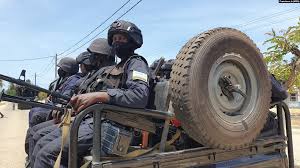
Ilustrative image
While the casualty figures and weapon seizures remain unverified, the claim itself is operationally and strategically relevant. IS-M continues to prioritise high-visibility attacks against foreign forces, particularly the RDF, which is perceived by the group as a central pillar of the Mozambican government’s counter-terrorism posture. Such claims serve both propaganda and psychological warfare objectives, aimed at undermining perceptions of security gains in recaptured districts.
The reported ambush underscores the persistent insurgent capability to conduct mobile, small-unit attacks along supply and patrol routes, exploiting terrain familiarity and gaps in convoy security. It also highlights the continued contestation of inland and transit areas, even as coastal towns remain under government and allied control.
Strategically, the incident signals that IS-M is seeking to reassert relevance and operational momentum by targeting international partners, thereby attempting to internationalise the conflict narrative and deter sustained foreign military engagement.
National Road NR380 is the most critical security artery in northern Cabo Delgado, linking Pemba, Macomia, Mocímboa da Praia, and Palma. Its strategic importance to military logistics, humanitarian access, and civilian movement makes it a high-value target for Islamic State of Mozambique. Dense terrain, predictable convoy routes, and proximity to contested districts enable frequent ambushes. Continued insecurity along NR380 undermines counter-insurgency operations, restricts humanitarian access, weakens economic recovery, and allows insurgents to project relevance without holding territory.
Manica Governor Warns of Terrorism Risk Linked to “Machete Men” Violence in Chimoio
On 13 January 2026, the Governor of Manica, Francisca Domingos Tomás, warned that the persistence of the “Machete Men” phenomenon in Chimoio could create conditions for the spread of terrorism in the province if society remains indifferent. Speaking at a meeting with religious leaders, she highlighted rising levels of violent crime, the province’s valuable natural resources as a potential driver of organised violence, and parallels with the early stages of the Cabo Delgado insurgency.

The Governor called on religious leaders to support efforts to prevent escalation. In response, religious representatives cited systemic challenges including weak community–police trust, tensions between the police and courts, and legal constraints on enforcement as factors enabling crime, while rejecting vigilantism. The meeting, which included police and provincial officials, forms part of broader consultations aimed at addressing the machete men threat through coordinated community and institutional action.
Analysis
The emergence of the so-called “machete men” phenomenon in Chimoio constitutes a critical early-warning indicator that should not be dismissed as ordinary criminality. Comparable warning signs were observed in Cabo Delgado between 2016 and 2017, when initial reports of Al-Sunnah/Shabaabs (locally dismissed as criminal gangs or religious radicals) were underestimated, and again in 2019-2020 with the rise of the Namparama community militias, which emerged as a response to perceived state incapacity and insecurity them inverted HR violations and threat to community. In both cases, early signals were ignored, allowing grievances, violence, and non-state armed actors to consolidate.
The Manica Provincial Governor’s decision to engage religious leaders is therefore strategically sound. Faith leaders often function as community sentinels, possessing granular insight into social tensions, youth mobilisation, and shifts in behavioural norms that formal security institutions may detect too late. Their involvement strengthens bottom-up early warning, a critical pillar of effective prevention.
While Manica is geographically distant from Mozambique’s northern terrorism epicentre, African conflict trajectories consistently demonstrate that violent extremism exploits fragility rather than proximity. Manica’s natural resource endowment, coupled with urban crime, youth unemployment, weak community-police trust, and judicial constraints, creates a permissive environment that could be exploited by organised criminal or extremist networks.
Of particular concern is Manica’s strategic border position with eastern Zimbabwe, especially the Chimoio-Mutare corridor. The porosity of the Mozambique-Zimbabwe border, longstanding informal cross-border trade routes, and population mobility significantly increase the risk of threat diffusion.
If left unaddressed, the machete-men phenomenon could mutate from localized violence into organised cross-border criminal or extremist activity, affecting both Manica and Zimbabwe’s Manicaland Province.
Early Warning
From an early-warning and prevention perspective, the following indicators are of immediate concern:
- Ritualised or symbolic violence (attacks focused on bloodshed rather than material gain), mirroring early patterns observed in Cabo Delgado.
- Youth group mobilisation outside formal structures, often framed around identity, grievance, or perceived injustice.
- Erosion of trust between communities and law-enforcement, creating space for vigilantism, militias, or parallel security actors.
- Narratives justifying violence as moral correction, justice, or defence of community values, especially when echoed by influential local voices.
- Cross-border movement of offenders, weapons, or ideas between Manica and Mutare, facilitated by informal routes and weak coordination.
Failure to act on these indicators’ risks losing the prevention window, after which responses become predominantly military, reactive, and costly.
Consequences
If early-warning signals are ignored and preventive measures delayed, the likely consequences include:
Escalation from criminal violence to organised armed activity, potentially with ideological or extremist overlays. Entrenchment of community militias or vigilante groups, undermining state authority and the rule of law. Cross-border insecurity, with Manica-Mutare becoming a corridor for criminal or extremist networks. Increased human rights violations, as communities resort to lynching or collective punishment in the absence of trusted justice mechanisms and Regional destabilisation, drawing Mozambique and Zimbabwe into a shared security challenge requiring far more complex and expensive interventions.
Strategic Implication
The situation in Manica should be treated as a preventive security priority, not a law-and-order anomaly. Early, coordinated action anchored in community intelligence, religious engagement, cross-border cooperation, and trust-building between citizens and the state, remains the most effective means of preventing a trajectory similar to Cabo Delgado from taking root in central Mozambique and spilling into eastern Zimbabwe.
Islamic State Mozambique Road Ambush on 09 January 2026
On 09 January 2026, two civilians were wounded following a firearm attack by Islamic State of Mozambique (IS-M) militants targeting a civilian goods convoy along National Road 380 (N380). The incident occurred in the vicinity of Xitaxi, within the V Congresso locality, on the stretch linking Macomia-sede to the town of Oasse, Cabo Delgado Province.
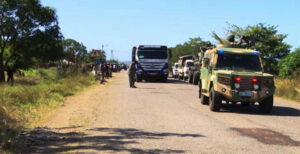
National Road 380 has remained a recurrent target of IS-M operations since October 2023. Notably, since August 2024. this current situation presents three concerning and interlinked scenarios;
- Economic Disruption and Market Vulnerability
The continued targeting of National Road 380 is likely to worsen the already fragile economic conditions in Mocímboa da Praia District. Recurrent road closures and the detention or seizure of goods disrupt supply chains, leading to shortages of essential commodities. This scarcity contributes directly to price inflation, reduced market equity, and increased hardship for local populations that depend on regular commercial flows for livelihoods and basic needs.
- Erosion of Confidence in State Security Provision
Despite the presence of Mozambique Defence Forces (FADM) escorts, the successful execution of the ambush highlights persistent security gaps along key transport corridors. Repeated attacks under such conditions risk eroding the confidence of traders, transporters, and civilians in the state’s ability to guarantee safe movement. This perception of insecurity may result in reduced commercial activity or the rerouting of trade away from affected areas.
- Expansion of IS-M Parallel Control Mechanisms
The weakening of trust in formal security arrangements may compel commercial transporters to seek alternative means of protection. In this context, the payment of “zakat” to IS-M previously observed along N380 may increasingly be viewed as a pragmatic option to ensure mobility and asset protection. This dynamic strengthens IS-M’s influence over economic corridors, reinforces its parallel governance structures, and further undermines state authority in northern Cabo Delgado.
Islamic State Mozambique Road Ambush
Date: 09 January 2026
Location: National Road 380 (N380), Xitaxi area, V Congresso locality, Mocímboa da Praia District, Cabo Delgado Province
On 09 January 2026, two civilians were wounded following a firearm attack by Islamic State Mozambique (IS-M) militants targeting a civilian goods convoy along National Road 380 (N380). The incident occurred in the vicinity of Xitaxi, within the V Congresso locality, on the stretch linking Macomia-sede to the town of Oasse, Cabo Delgado Province.
As a result of the attack, traffic along N380 was suspended until 10 January 2026, significantly disrupting the movement of people and commercial goods along this critical supply route. During the ambush, IS-M elements reportedly seized food supplies and other unspecified goods. The convoy was under escort by the Mozambique Defence Forces (FADM) at the time of the incident, underscoring the continued vulnerability of escorted civilian traffic in contested areas.
National Road 380 has remained a recurrent target of IS-M operations since October 2023. Notably, in August 2024, the group reportedly established informal “zakat” collection points at certain sections of the road, coercing transiting civilians and traders into making payments in exchange for passage and perceived security.
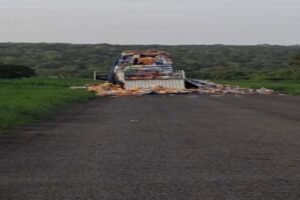
The current situation presents two concerning and interlinked scenarios. First, the disruption of commercial traffic is likely to exacerbate the already fragile economic conditions in Mocímboa da Praia, as delays and interdictions of goods contribute to scarcity, price inflation, and reduced market equity. Second, persistent attacks despite military escorts risk further eroding traders’ confidence in state-provided security measures.
This erosion may incentivize commercial transporters to increasingly rely on informal arrangements with IS-M, including the payment of “zakat,” as a means of ensuring safer passage and continuity of trade.
If left unaddressed, these dynamics may further entrench IS-M’s parallel control over key economic corridors, undermining state authority, local livelihoods, and longer-term stabilization efforts in northern Cabo Delgado.
TERROR FINANCING TRAINING – SADC MEMBER STATES
EWRAC TO PRESENT REGIONAL TERRORIST TREAT LANDSCAPE FOCUSSING ON TERROR FINANCING AT SADC MEMBER STATES
Luanda, Angola – The Early Warning, Research and Analysis Centre (EWRAC), a premier research institution focused on Southern Africa, will co-host the upcoming Regional Capacity-Building Workshop for Strengthening the Investigation of Money Laundering and Terrorist Financing Cases in Southern Africa from 26 to 30 January 2026.
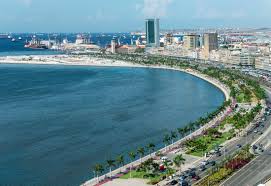
Co-Hosted by EWRAC, Interpol RBH, ISS, and Angolan Ministry of Interior
In collaboration with the Interpol Regional Bureau, the Institute for Security Studies (ISS) and the Ministry of Interior, EWRAC will present a comprehensive analysis of the regional terrorist financing landscape.
EWRAC’s Contribution
As part of its co-hosting role, EWRAC will provide a detailed threat analysis on the regional terrorist financing landscape. This assessment will focus on identifying key trends, patterns, and methodologies employed by terrorist organizations in Southern Africa to finance their activities.
Key entities attending are 2 senior officials from each SADC Member States, and senior representatives from Angola’s:
- National Bank of Angola (BNA)
- Financial Intelligence Unit (UIF)
- Criminal Investigation Service (SIC)
- Ministry of Interior of Angola
- Office of the Prosecutor-General of Angola
- President Cabinet
- Ministry of Defense
Call for Collaboration
The EWRAC-led workshop underscores the importance of regional cooperation in countering financial crimes and terrorism. Through this initiative, EWRAC aims to facilitate knowledge-sharing, capacity-building, and collaboration among regional stakeholders, ultimately contributing to a safer and more secure SADC Region.
Special Acknowledgement
The EWRAC extends its sincere appreciation and commends the Institute for Security Studies (ISS), INTERPOL RBH, and the Ministry of the Interior of the Republic of Angola for their valuable collaboration and outstanding dedication to advancing a safer and more resilient Southern Africa.
JOINT FORCES (FARDC-UPDF) DISMANTLE ISCAP IN MAMBASA
On January 9th, a joint operation between the Armed Forces of the Democratic Republic of Congo (FARDC) and the Ugandan People’s Defence Forces (UPDF) successfully dismantled an Islamic Central African Province (ISCAP) strong hold located in Matolo-Kaseni, around Ituri River. The operation marked a significant effort to disrupt ISCAP’s activities in the region, particularly in areas where the terrorist group was attempting to regroup and launch attacks on local communities.
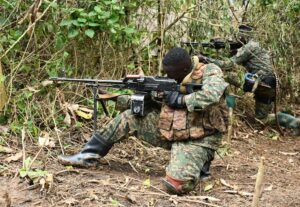
Illustrative image
Context of the Operation
The joint forces launched the operation in response to a recent attack on military bases in Banju-Banju and Kolo-Kolo in Babila Bakwanza chiefdom, approximately 100 kilometers from Bunia (RN27) in Mambasa territory, Ituri province. The attack resulted in the deaths of five (05) FARDC soldiers and six (06) civilians, as well as the wounding of ten (10) non-combatants between January 7th to 10th.
Future Operation, the active forces in Mambasa are calling for the extension of joint operations to west Lolwa and Menzimenzi, where ISCAP has a stronghold for rearming and launching new attacks.
The success of this operation highlights the need for continued cooperation between regional forces to combat terrorism and ensure regional stability.
Local Support
The operation has received support from local community leaders, who have been engaged with the FARDC and UPDF, advocating the establishment of military positions in Elake, Leta, and Sita Rudi to secure access to agricultural fields for the local population.
The community’s involvement is crucial in maintaining stability and security in the region.