Double Attack on Mozambican Armed Forces Leaves 9 Soldiers Dead
-12.01960 40.17748
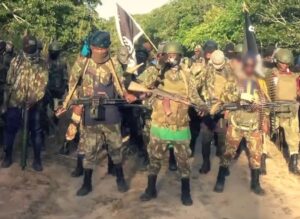
A coordinated firearm attack on two Mozambican Armed Forces (FADM) camps in northern Mozambique has resulted in the loss of nine soldiers. The attacks, claimed by Islamic State-Mozambique (IS-M), targeted a camp located in the Catupa forest and another near the village of Namabo, approximately 25km north of Macomia town.
Heavy Firepower Used in Ambush
The terrorists ambushed the military camps using mortars and several weapons, demonstrating their ability to launch well-planned and coordinated attacks. The incident is a stark reminder of the ongoing threat posed by IS-M in northern Mozambique.
IS-M’s Claim of Seizing FADM Bases
In a statement released through Islamic State propaganda channels, the group claimed that the two bases had been occupied by the FADM in two phases: 2022 and 2025. The statement is accompanied by a 23-second video showing various war materials allegedly seized during the invasion.
Ongoing Security Concerns in Northern Mozambique
The double attack highlights the persistent security challenges facing northern Mozambique, particularly in the districts of Mocímboa da Praia and Macomia. Despite efforts by Defense and Security Forces to combat terrorism, terrorist activity continues to be a concern in the region.
Humanitarian Implications
The loss of life and ongoing instability in the region have significant humanitarian implications for local communities. The government must prioritize addressing the root causes of terrorism, including poverty, unemployment, and lack of access to basic services, to prevent further escalation of violence.
Traffic Resumes After IS-M Attack
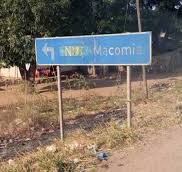
Illustrative image
Traffic has resumed on National Highway N380 after being blocked by an Islamic State of Mozambique (IS-M) attack against a civilian convoy on January 2. The blockade was caused due to the presence of terrorists across major points of the highway, which forced drivers and commuters to divert their route.
Security Challenges in Northern Mozambique
The incident highlights the ongoing security challenges facing northern Mozambique, particularly in the districts of Mocímboa da Praia and Macomia. Despite efforts by Defense and Security Forces to combat terrorism, terrorist activity continues to be a concern in the region.
Government Commitment to Combating Terrorism
Just days after the attack, President Daniel Chapo reaffirmed the government’s commitment to combating terrorism during a speech in Mocímboa da Praia. The incident serves as a reminder of the need for continued vigilance and cooperation between security forces to address the issue.
Long-term Solution Needed
To tackle the root causes of terrorism in northern Mozambique, the government must consider addressing the economic and social factors that drive individuals to join extremist groups. This includes improving living standards, creating jobs, and promoting community development initiatives.
IS-M Attack on National Road 380 Leaves No Victims
Illustrative image
On January 02nd , a convoy traveling along the Macomia-Mucojo stretch of National Road 380 was ambushed by Islamic State of Mozambique (IS-M) terrorists. The incident highlights the ongoing threat posed by terrorism in northern Mozambique.
Details of the Ambush
The attack occurred when IS-M fighters, all armed with firearms, fired shots to stop a convoy of passenger cars traveling on the road. Motorists were forced to drive their vehicles into the bush to avoid detection by Mozambican and Rwandan Defense and Security Forces. Once inside the bush, occupants were forced to hand over cell phones and cash.
No Human Casualties Reported
Fortunately, no human casualties were reported during the ambush. However, IS-M fighters did confiscate various food products from the convoy. After releasing the occupants, some continued their journey to the Mucojo Administrative Post, while others returned to report the incident to Rwandan troops.
Ongoing Terrorist Presence in Northern Mozambique
The ambush occurred just days after President Daniel Chapo reaffirmed the government’s commitment to combating terrorism during a speech in Mocímboa da Praia. Despite ongoing operations by Defense and Security Forces, terrorist activity continues to be a major concern in the districts of Mocímboa da Praia and Macomia.
Analysis
This incident highlights the complexity of the terrorist threat facing northern Mozambique. The ability of IS-M fighters to carry out ambushes without facing significant resistance from security forces suggests that more needs to be done to address the issue.
The fact that motorists were forced to drive their vehicles into the bush, allegedly to avoid attracting attention from patrols, raises questions about the effectiveness of joint operations between Mozambican and Rwandan forces. The confiscation of food products by IS-M fighters also underscores the economic motivations behind terrorist activity in the region.
At Least 25 Civilians Killed in ISCAP Firearm Attacks in Lubero, North Kivu
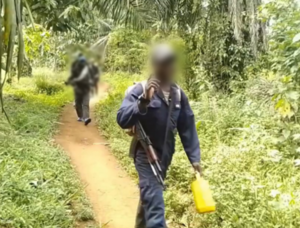
Illustrative
Claimed vs. Unclaimed ISCAP Attack Pattern Analysis
The Lubero attacks remain unclaimed by ISCAP at the time of reporting, consistent with a broader pattern observed in rural North Kivu operations. ISCAP typically claims attacks selectively, prioritizing operations that target military forces, produce symbolic propaganda value, or align with Islamic State central messaging objectives. In contrast, mass-casualty attacks against isolated civilian communities, particularly those involving small-arms fire and arson, are frequently left unclaimed. EWRAC Analysis Unit assess that this approach allows ISCAP to achieve tactical objectives, such as depopulation, intimidation, territorial disruption, and logistical control while minimizing international attention and avoiding pressure that follows high-profile claims. The absence of a claim in this case does not indicate a lack of ISCAP involvement, but rather reflects a deliberate operational choice aligned with the group’s long-standing strategy in eastern DRC.
At least 23 civilians were reportedly killed, and two FARDC soldiers burned to death
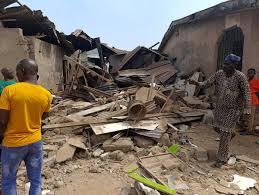
Illustrative image
At least 23 civilians were reportedly killed, and two FARDC soldiers burned to death, during a double coordinated ISCAP firearm attack on civilian communities in Lubero Territory, eastern DRC, late January 2026. Casualty figures remain preliminary and subject to verification.
The attacks occurred in the villages of Mavwe Mavwe and Musenge, located in the Mwenye groupement of Baswagha chiefdom. The first incident was reported on the night of 19–20 January, when suspected ISCAP terrorists opened fire on civilians in Mavwe Mavwe, resulting in multiple civilian deaths and the burning of several homes.
A second, more severe attack followed on the night of 25 January in Musenge village, where the majority of reported fatalities occurred. Local sources indicate that at least 23 civilians were killed, dozens of homes were destroyed, and civilian infrastructure including a health center and a Catholic church were set ablaze. During the same incident, two Congolese army (FARDC) soldiers were found burned beyond recognition.
The group burnt 63 houses, two motorcycles destroyed and at least one civilian sustained serious injury. Due to access constraints and ongoing insecurity, independent verification of casualty figures has not yet been completed.
The attack triggered significant population displacement, with hundreds of civilians fleeing toward Masoya village, Mwenye town, and the city of Butembo, approximately 30 kilometres away. Displaced residents reported leaving due to fear of additional attacks, indicating sustained insecurity in rural Lubero.
Colonel Kiwewa Mitela Alain, military administrator of Lubero Territory, confirmed the incidents and the extent of destruction, stating that casualty figures remain provisional pending verification by joint Congolese and Ugandan security teams deployed to the affected villages.
These attacks demonstrate continued ISCAP operational capacity, including coordinated small-arms assaults and systematic arson targeting civilian settlements. EWRAC, assess that without improved civilian protection and recalibrated security deployments, the risk of further attacks in Lubero Territory remains high.
Situation Report – ISCAP ATTACKS IN LUBERO TERRITORY, NORTH KIVU
Between 19 and 25 January 2026, armed fighters of the ISCAP conducted a series of deadly firearm attacks against civilian populations in Lubero Territory, North Kivu Province. The assaults targeted the villages of Mavwe Mavwe and Musenge, resulting in around 25 civilian casualties, widespread destruction of homes and essential infrastructure, and the displacement of hundreds of residents.
SITREP – Lubero attacks
26 Corpses Recovered, ISCAP Triple Firearm Attack on Villages in Ituri
Security Analysis
Incident Overview
The recovery of 26 bodies following a coordinated triple firearm attack in Apakulo, Ahombo, and Mangwalo underscores the persistent insecurity in the Walese Vonkutu Chiefdom, Irumu Territory. The timing, scale, and lethality of the assault indicate a deliberate mass-casualty operation rather than an opportunistic act of violence.
Perpetrator Assessment
Although not officially claimed, the attack bears the hallmarks of the ISCAP, a group with a sustained operational footprint in the Irumu–Mambasa axis. The villages targeted lie within areas previously designated as high-risk due to ISCAP mobility and temporary encampments. The pattern aligns with ISCAP tactics of retaliatory or survival-driven violence when under military pressure.
Tactics, Techniques, and Procedures (TTPs)
- Simultaneous/near-simultaneous attacks on multiple villages suggest coordination and local reconnaissance using children as spotters (IS-Trend).
- Firearm-based assaults indicate access to small arms and an intent to maximize lethality while maintaining mobility.
- Targeting of remote, unsecured villages reflects a strategy of exploiting security gaps and intimidating civilian populations.
Operational Environment
The affected area’s dense rural terrain, proximity to the Ituri River, and closeness to the Mambasa border zone facilitate cross-river movement and evasion. Local administrator Colonel Siro Simba’s remarks confirm that ISCAP elements exploit these natural corridors to escape pressure from joint FARDC–UPDF operations, temporarily dispersing and reconstituting in less secured zones.
Impact on Civilian Security
The attack has intensified fear and displacement risks among local communities already constrained by restricted access and limited protection. The use of villages previously declared off-limits highlights the gap between threat designation and effective area denial or civilian protection.
Strategic Implications Outlook
Absent a reinforced and sustained security presence, including patrol density and territorial control, similar attacks remain likely in peripheral and riverine zones of Irumu. The incident demonstrates that ongoing military operations, while degrading ISCAP strongholds, have not yet eliminated the group’s capacity to conduct lethal attacks.
- Continued ISCAP mobility suggests insufficient area control and holding capacity after clearing operations.
- The violence risks undermining civilian confidence in state protection and may contribute to forced displacement or community self-defence dynamics.
Civilian authorities’ calls for reinforcement reflect an urgent need to shift from reactive operations to persistent stabilization and protection measures to mitigate further mass-casualty incidents.
26 Corpses Recovered Following ISCAP Triple Firearm Attack on Villages in Ituri
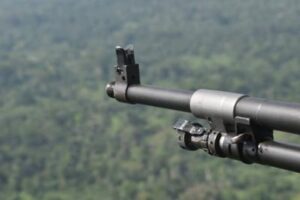
ilustrative
At least 26 bodies were recovered following a coordinated ISCAP firearm attack targeting the villages of Apakulo, Ahombo, and Mangwalo in the Walese Vonkutu Chiefdom, Ituri Province.
According to Colonel Siro Simba, Administrator of Irumu Territory, the security situation in the area remains highly volatile. He noted that the locality has been experiencing recurrent ISCAP attacks, underscoring the continued threat posed by the group and the persistent insecurity affecting civilian populations.
Rwandan Forces Neutralise at Least 35 IS-Mozambique Insurgents in Northern Cabo Delgado
79° 58′ 56″ W
15 December 2025, Rwandan security forces operating in northern Mozambique neutralised at least 35 Islamic State of Mozambique (IS-M) insurgents during counter-insurgency operations across the districts of Macómia, Mocímboa da Praia, and Muidumbe. The operations were conducted in response to coordinated insurgent attacks along the N380 National Road, a critical logistics and mobility corridor linking key districts in Cabo Delgado.
The clashes resulted in the temporary closure of the N380 for several days, underscoring the continued ability of insurgent elements to disrupt strategic transport infrastructure despite sustained military pressure from Mozambican forces, the RDF, and bilateral partners. The targeting of the highway highlights the group’s enduring intent to undermine freedom of movement, economic activity, and security force redeployment in northern Cabo Delgado.
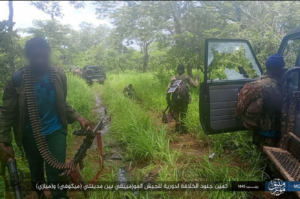
Ilustrative image
While the successful neutralisation of a significant number of insurgents reflects ongoing tactical effectiveness by Rwandan forces, the incidents also demonstrate the residual resilience and adaptability of IS-M, particularly its focus on ambushes and hit-and-run attacks along key supply routes. The N380 remains a high-value target for insurgents seeking to project relevance, impose economic costs, and challenge state and allied control.
The episode reinforces the need for sustained route-security operations, improved early-warning mechanisms, and enhanced civil–military coordination to prevent recurring disruptions along strategic corridors. It also highlights the importance of consolidating military gains through stabilisation and governance measures to deny insurgents the operational space necessary to regenerate.
Islamic State Claims Attack on Rwandan Naval Patrol in Mocímboa da Praia
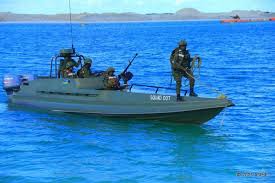
ilustrative image
Islamic State of Mozambique has claimed responsibility for an attack targeting a Rwandan Defence Force (RDF) naval patrol in the district of Mocímboa da Praia. 27 December 2025.
According to the claim, several RDF naval personnel were wounded during the engagement. The details of the incident, including casualty figures and the extent of damage, remain unverified.
The claimed attack is strategically significant, as it indicates IS-M’s continued intent to contest maritime and littoral security, particularly in coastal districts that are critical to supply routes, offshore access, and economic infrastructure. While much of Mocímboa da Praia town remains under government and bilateral forces control, surrounding coastal and riverine areas continue to present operational vulnerabilities.
From an analytical perspective, the incident underscores IS-M’s adaptive tactics, extending beyond land-based ambushes to harassment of naval patrols, potentially aimed at disrupting coastal surveillance and constraining freedom of movement for security forces. Such actions also carry a symbolic dimension, challenging narratives of stabilisation and demonstrating the group’s ability to operate across multiple domains.
If sustained, maritime-focused attacks could complicate counter-insurgency efforts by stretching security resources and increasing the protection burden for sea lines of communication, reinforcing the need for integrated land-sea intelligence coordination and early-warning mechanisms along Cabo Delgado’s coastline.