Strengthening Financial Integrity in Southern Africa
 The Regional Capacity-Building Workshop held in Luanda, Angola, from January 26 to 30, 2026, represents a landmark success in the collective security architecture of Southern Africa. This high-level initiative was co-organized by the INTERPOL Regional Bureau in Harare, the ISS-ENACT Project, and the Government of Angola, marking a significant milestone in regional efforts to combat Money Laundering (ML) and Terrorist Financing (TF).
The Angolan Ministry of the Interior played a pivotal role in hosting the event, ensuring a multidisciplinary engagement that integrated key national bodies, including the Financial Intelligence Unit (UIF), the National Bank of Angola (BNA), and the Criminal Investigation Service (SIC), alongside the Angolan Armed Forces and state security services. The workshop achieved widespread regional involvement, convening two operational experts one investigator and an intelligence officer from each of the sixteen SADC member states.
Strategic context and regional threat assessments were provided by facilitators from EWRAC, presented a comprehensive analysis of the regional security landscape. This presentation delineated current terrorism financing trends, patterns, and methodologies specific to the SADC region, establishing a critical foundation for understanding how extremist groups exploit regional vulnerabilities and boundless opportunities to mobilize funds.
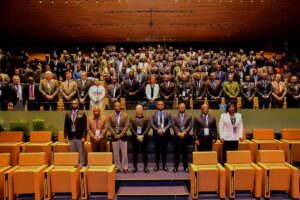
Building on this strategic framework, trainers from the Swiss-based i-intelligence GmbH, who facilitated specialized coursework on Professional Open Source Intelligence (OSINT). These experts equipped participants with advanced cyber investigation skills and rigorous methods for handling digital evidence, both of which are essential for detecting and disrupting sophisticated modern financial crimes in an increasingly complex digital environment.
The current regional situation remains challenging, with pervasive illicit financial flows and several SADC MS remaining on the FATF Grey List. This workshop addressed these strategic deficiencies by promoting the exchange of best practices and discussing strategies to exit and avoid international monitoring.
Regional efforts are now focused on transitioning from reactive models to preventive security measures, including the creation of an informal network of investigators for rapid information sharing. By fostering this level of cooperation between INTERPOL, regional intelligence bodies, and national law enforcement, the Luanda workshop has successfully created a regional pool of expertise dedicated to protecting the integrity of the Southern African financial ecosystem.
Kajiado County Counterterrorism operation
The arrests in Kajiado County illustrate both the operational persistence of Al-Shabaab and the analytical complexity of interpreting disrupted plots.
The seizure of five AK-47 rifles, 20 magazines carrying approximately 600 rounds, a pistol with 24 rounds, six grenades, explosives, narcotics, and trauma-related medical supplies, including injectable Vitamin K, indicates preparation for sustained armed attack. However, capability alone does not conclusively establish final target selection.
Kenyan authorities assess that the cell intended to strike Nairobi during Ramadan, a period Al-Shabaab has historically treated as symbolically potent. Nairobi remains a high-value target: it is Kenya’s political and economic center, hosts diplomatic missions and international organizations, and offers dense civilian concentrations that amplify psychological and media impact. From a strategic communications perspective, an attack in Nairobi generates global resonance in a way peripheral target do not. Terrorist organizations rarely attack environments they perceive as safe havens; rather, they prioritize politically symbolic urban centers to project reach and undermine state confidence.
That said, alternative hypotheses merit consideration. Kajiado County borders northern Tanzania and lies along mobility corridors linking Nairobi to coastal and northern routes. Tanzania has, at times, functioned as a transit environment for individuals moving toward Somalia or other active theaters such as Mozambique or eastern DRC. The presence of Tanzanian nationals could therefore reflect facilitation or transit dynamics rather than a Kenya-centric operational objective. The quantity of weapons while sufficient for a soft-target assault could also support onward movement to another theater, for Nairobi is heavily counterterrorism guarded.
The critical analytical question concerns intelligence validation. Kenyan services referenced “months of surveillance and covert intelligence gathering.” Confirmation of a Nairobi-specific plot would typically derive from intercepted communications referencing target reconnaissance, recovery of maps or site photographs, financial transfers earmarked for local logistics, or human intelligence indicating imminent movement toward specific neighborhoods such as Katche in Nairobi. Without such indicators, the possibility of strategic deception, compartmentalization, or even a fluid target selection process remains plausible.
The broader pattern of Tanzanian recruitment intersects with geography, economic vulnerability, and deception tactics, including false job offers used to lure recruits across borders. Whether Nairobi was the definitive target or part of a transit trajectory, the case underscores adaptive, cross-border cells leveraging refugee-adjacent environments, informal movement corridors, and decentralized financing. The analytical priority should remain evidence-based attribution of intent while accounting for the fluid operational geography spanning Kenya, Tanzania, Somalia, Mozambique, and the eastern DRC.
Kenyan Security Agencies Foil at Kajiado County a Al-Shabaab Plot Targeting Nairobi During Ramadan
Kenyan security agencies have disrupted a planned mass-casualty attack in Nairobi allegedly orchestrated by operatives linked to Al-Shabaab. The plot was reportedly timed to coincide with the holy month of Ramadan, which began on February 18, 2026, and was designed to strike crowded urban locations in the capital.
According to the Counter Terrorism Policing Unit (CTPU), the operation followed months of surveillance and intelligence-led investigations tracking a suspected extremist network with logistical and facilitation links extending from the Dadaab Refugee Complex in Garissa County to Nairobi. Authorities believe elements of the cell exploited refugee settlements as cover while coordinating movements of personnel and material toward the capital.
Weapons and Equipment Seized
During coordinated raids, security officers recovered a substantial cache of weapons and operational materials allegedly intended for deployment in the Capital. The seized items included:
- Five AK-47 assault rifles
- Twenty 30-round magazines (approximately 600 rounds of ammunition)
- One pistol with 24 rounds
- Six grenades
- Additional explosive materials
- Narcotics
- Injectable Vitamin K
- Assorted medical supplies
Investigators assess that the quantity of firearms, ammunition, and grenades points to a coordinated, multi-site attack scenario rather than a lone-actor operation. The inclusion of narcotics suggests possible use for operational financing, coercion, or logistical exchange within criminal-terror networks.
Network Composition and Financial Links
Authorities have identified a transnational dimension to the disrupted network. Parallel financial investigations led to the freezing of 13 bank accounts linked to suspected terrorism financing activities. The accounts were held by:
- 10 Kenyan nationals
- 2 Tanzanian nationals
- 1 Ugandan national
Officials believe the accounts were used to receive, store, and transfer funds in support of extremist operations, highlighting regional facilitation channels extending beyond Kenya’s borders.
Intended Modus Operandi
Preliminary intelligence assessments indicate that, in addition to planned bombings or armed assaults in high-density civilian areas, the suspects were exploring secondary operations including:
- Kidnapping of foreign nationals
- Hijacking of vehicles to support mobility and potential follow-on attacks
Some operational indicators also suggest attempts to embed operatives within civilian settings in Nairobi, including settlements such as Katche, in order to reduce detection risk prior to execution.
Strategic Context
Kenya remains a high-priority target for Al-Shabaab due to its continued military engagement in Somalia under the African Union stabilization framework. The group has historically demonstrated the capability to conduct complex attacks inside Kenya, combining local facilitation, cross-border infiltration, and financial networks.
The latest disruption underscores both the persistent intent of Al-Shabaab to conduct high-impact urban terrorism and the effectiveness of sustained intelligence operations by Kenyan security agencies. However, the case also highlights enduring vulnerabilities, particularly the exploitation of refugee environments, cross-border financial flows, and decentralized recruitment and logistics cells.
Security agencies have heightened patrols, reinforced checkpoints, and expanded surveillance operations in Nairobi and other major towns as investigations continue. Authorities maintain that the capital remains secure but warn that the threat landscape remains dynamic, especially during religious or nationally significant periods.
Analysis and Prognosis: U.S. Designation of Muslim Brotherhood Branches
On 13 January 2026, the U.S. Department of the Treasury’s Office of Foreign Assets Control (OFAChttps://home.treasury.gov/news/press-releases/sb0357), in coordination with the Department of State, designated the Egyptian and Jordanian branches of the Muslim Brotherhood as Specially Designated Global Terrorists under Executive Order 13224, as amended. Concurrently, the Lebanese branch, al-Jamaa al-Islamiyah, and its Secretary General Muhammad Fawzi Taqqosh, was also individually designated under both terrorism authorities and Foreign Terrorist Organization provisions 13224. These actions represent a significant escalation in U.S. policy toward the transnational Muslim Brotherhood network and reflect a shift from selective targeting of militant offshoots, such as Hamas, to direct action against core Brotherhood branches. said Under Secretary of the Treasury for Terrorism and Financial Intelligence John. K. Hurley,
Strategically, this move formalizes a long-debated U.S. position: whether the Muslim Brotherhood should be treated as a heterogeneous political movement with varied national expressions, or as a structured ideological ecosystem that incubates and materially supports violent actors. Washington’s position now clearly aligns with the latter interpretation, at least with respect to specific national chapters.
The Muslim Brotherhood, founded in 1928 in Egypt, operates as a transnational ideological movement rather than a centralized command structure. Its branches adapt to domestic political environments, oscillating between electoral participation, social welfare provision, and clandestine political activism. In Egypt, the organization briefly held executive power under President Mohamed Morsi before being removed by the military in 2013. Since then, the Egyptian state has framed the Brotherhood as an existential security threat, linking it to domestic instability and alleged coordination with Hamas in Gaza.
In Jordan, despite the group’s formal dissolution by judicial order in 2020, networks associated with the Brotherhood have remained socially embedded through charities, professional associations, and political activism. In Lebanon, al-Jamaa al-Islamiyah operates in a complex environment shaped by sectarian politics and the dominant role of Hezbollah. The U.S. designation signals a determination to disrupt perceived logistical or financial pipelines connecting these networks to Hamas.
From a broader geopolitical perspective, the decision aligns U.S. policy more closely with Egypt, the United Arab Emirates, and Saudi Arabia, all of which treat the Brotherhood as a destabilizing ideological competitor. However, it diverges from approaches in parts of Europe where Brotherhood-affiliated organizations often function legally within civil society frameworks, albeit under increasing scrutiny. Several European governments have investigated funding streams, foreign influence operations, and ideological radicalization networks linked to Brotherhood-inspired entities, particularly within diaspora communities.
In Africa, the Brotherhood’s influence has historically relied less on overt militancy and more on soft-power penetration. Through scholarships, religious education networks, charitable associations, and civil society partnerships, Brotherhood-aligned actors have cultivated long-term social capital. In countries such as the Comoros and parts of East Africa, religious NGOs linked to Gulf funding streams have expanded educational and welfare footprints. While such activities are not inherently terrorist, the concern among security establishments is that ideological indoctrination and elite grooming create latent political leverage within state institutions over time.
The prognosis is complex. The U.S. designations will likely constrain formal financial transactions, deter international banking cooperation, and complicate fundraising channels. They may also embolden partner governments in the Middle East and North Africa to intensify domestic crackdowns. However, history suggests that movements with decentralized structures adapt by fragmenting further, shifting to informal financing, or deepening integration into local civil society networks.
In Southern Africa, the threat profile is less kinetic and more institutional. The risk lies in ideological entrenchment within education systems, bureaucratic recruitment pipelines, and political patronage networks rather than immediate violent insurgency. Countermeasures therefore require calibrated responses: enhanced financial transparency regulations, vetting mechanisms for foreign-funded educational programs, monitoring of cross-border charity flows, and community-based counter-radicalization strategies that avoid criminalizing legitimate religious expression.
Whether President Trump’s decision was strategically sound depends on the metric applied. From a counterterrorism financing standpoint, the action strengthens legal authorities to disrupt material support networks connected to Hamas. From a diplomatic and conflict-resolution perspective, it may reduce space for political engagement with Islamist actors who operate within electoral systems. The long-term impact will hinge on enforcement consistency, allied coordination, and the degree to which targeted entities adapt structurally.
Ultimately, the designation reframes the Muslim Brotherhood not merely as a political movement with controversial ideology, but as part of a broader security architecture linked directly or indirectly to militant actors. The effectiveness of this approach will depend less on the designation itself and more on sustained financial intelligence, multinational cooperation, and the ability to distinguish between ideological activism and operational terrorism within a fragmented transnational network.
U.S. Designates Muslim Brotherhood Branches Under Counterterrorism Authorities
On 13 January 2026, the U.S. Department of the Treasury’s Office of Foreign Assets Control (OFAC), in coordination with the Department of State, designated the Egyptian and Jordanian branches of the Muslim Brotherhood as Specially Designated Global Terrorists under Executive Order 13224, as amended. In a parallel action, the Lebanese branch, al-Jamaa al-Islamiyah, was designated as both a Foreign Terrorist Organization and a Specially Designated Global Terrorist, along with its Secretary General Muhammad Fawzi Taqqosh, was also individually designated under E.O. 13224.
The designations are grounded in U.S. assessments that these branches provided material support to Hamas, which the United States already lists as a terrorist organization. According to U.S. authorities, the targeted branches facilitated financial transfers, logistical coordination, recruitment, and operational support linked to Hamas activities in Gaza and the broader region.
U.S. officials stated that the action reflects a broader policy direction to disrupt networks that enable or legitimize terrorist activity under the cover of civic, political, or charitable work. The designations follow Executive Order 14362 of November 24, 2025, which provides a framework for identifying specific Muslim Brotherhood chapters as terrorist entities where evidence of material support to designated groups exists.
The Egyptian Muslim Brotherhood is accused of coordinating with Hamas elements in 2024–2025, including facilitating the movement of individuals seeking to join militant operations in Gaza and supporting financial channels tied to Hamas operatives. The Jordanian branch, despite its formal dissolution by court order in 2020, is alleged to have maintained networks that engaged in recruitment, fundraising, and technical support activities involving rockets, explosives, and drones.
Under U.S. sanctions law, all property and interests in property of the designated entities within U.S. jurisdiction are blocked. U.S. persons are generally prohibited from engaging in transactions involving these entities, and foreign financial institutions that knowingly facilitate significant transactions on their behalf risk secondary sanctions. Civil and criminal penalties may apply for violations.
Strategically, the move signals a shift from targeting only violent offshoots toward addressing enabling ecosystems. The Muslim Brotherhood, founded in Egypt in 1928, operates as a transnational ideological movement with decentralized national branches. While some branches participate in political processes, U.S. authorities argue that certain chapters have crossed the threshold from ideological alignment into actionable support for terrorism.
The designations are likely to intensify geopolitical polarization around the Brotherhood. Egypt, the United Arab Emirates, and Saudi Arabia have long treated the movement as a security threat, whereas some European states have permitted Brotherhood-affiliated organizations to operate legally under civil society frameworks. The U.S. action may prompt closer scrutiny of financial flows, charities, and transnational networks linked to Brotherhood-aligned entities.
Ultimately, the impact of the decision will depend on enforcement, intelligence cooperation, and the degree to which designated branches can adapt through informal financing or decentralized structures. The stated objective of the sanction’s regime is behavioral change disrupting financial pipelines and constraining operational support to terrorist actors rather than symbolic designation alone.
Strategic Analysis of ISIS Al-Naba Issue 297
Islamic State of the Central Africa Province (ISCAP)
The referenced edition of Al-Naba represents a structured propaganda and operational signaling product from the Islamic State Central Africa Province (ISCAP), covering activities in eastern DRC (Beni–Ituri axis) and northern Mozambique (Cabo Delgado). The content serves three primary purposes: narrative dominance, force projection, and morale reinforcement.
- Operational Signaling and Escalation Narrative
The report frames the violence as a “new escalation” despite “military campaigns launched against them by regional armies.” This messaging is deliberate. It attempts to counter perceptions that joint operations by the Mozambican forces, Rwanda, and SADC contingents have strategically degraded ISCAP capacity.
By highlighting attacks in:
- Beni and Ituri (DRC)
- Macomia, Mocímboa da Praia, Palma, Muidumbe (Mozambique)
ISCAP reinforces the image of a geographically resilient, bi-national insurgent structure capable of sustaining parallel theaters of operation.
The operational themes emphasized include:
- Barracks assaults
- Trade route ambushes
- Village overruns
- Targeted killings of soldiers and civilians
- Seizure of weapons and vehicles
This reflects classic insurgent doctrine: attack mobility, undermine fixed positions, and prioritize symbolic targets.
- Casualty Inflation and Psychological Warfare
The casualty figures (22 Congolese soldiers, 12 Mozambican soldiers, 15 Christians, etc.) likely contain inflation. Historically, ISIS media outlets amplify enemy losses while minimizing their own (notably acknowledging only “six killed including an officer”).
This asymmetry serves recruitment and morale objectives:
- Demonstrate operational superiority
- Reinforce divine sanction narrative (“praise be to God”)
- Maintain global jihadist credibility
The repeated emphasis on burning homes and trucks is symbolic. Fire is used as both a tactical and visual propaganda tool, creating dramatic imagery for dissemination.
- Strategic Focus on Trade Routes
A critical analytical takeaway is the targeting of:
- The Oicha–Chanche N4 trade route (DRC)
- N380 major mobility corridor in Cabo Delgado
This reflects economic warfare doctrine. By striking trade arteries, Islamic State seeks to:
- Disrupt local economies
- Undermine government legitimacy
- Restrict civilian movement
- Impose de facto control through fear
This mirrors similar corridor-focused tactics along Mozambique’s N380 and secondary feeder routes.
- Cross-Theater Synchronization
The report deliberately links Congo and Mozambique operations in a single narrative stream. This reinforces the “Central Africa Province” identity rather than separate insurgencies.
Strategically, this serves:
- Branding consolidation under ISIS central leadership
- Transnational recruitment appeal
- Demonstration of operational depth across porous borders
It also suggests continued mobility corridors and ideological alignment between rebels groups in DRC and IS-M cells in Mozambique.
- Governance and Control Signaling
Repeated references to seizing weapons, vehicles, and burning positions signal more than battlefield success. They are assertions of territorial contestation. Even if temporary, these village overruns project an image of insurgent sovereignty.
The narrative indicates:
- Ability to overrun lightly defended positions
- Capability to withdraw “safely” after engagements
- Sustained clash durations (two-day engagements claimed)
If partially accurate, this suggests:
- Insufficient holding capacity by state forces
- Gaps in rapid reaction and air mobility
- Intelligence shortfalls in pre-empting insurgent concentration
- Strategic Intent
The broader strategic messaging indicates that ISCAP aims to demonstrate:
- Endurance despite multinational counteroffensives
- Ability to conduct simultaneous offensive operations
- Expansion of attacks against both military and civilian targets
This edition is less about territorial conquest and more about perception warfare. It attempts to reshape the narrative from “containment” to “resurgence.”
- Outlook
If operational tempo matches even a fraction of the claims, the conflict is entering a phase of insurgent recalibration rather than decline. The emphasis on trade routes, barracks raids, and cross-border continuity suggests a shift toward sustained attrition rather than territorial holding.
For regional actors, the implication is clear: ISCAP’s center of gravity is mobility and psychological dominance, not static territory. Counter-strategy must therefore prioritize corridor security, intelligence penetration of recruitment networks, and persistent area denial otherwise insurgent messaging will continue to outpace battlefield realities.
Security situation in Road N38 in Cabo Delgado
- Incident Overview: National Road 380 (N380) Corridor
The security environment across the primary transit arteries of Cabo Delgado has entered a phase of heightened volatility. Recent kinetic activity by Islamic State Mozambique (IS-M) confirms that the N380 remains the primary focal point for insurgent interdiction operations.
- Date: 16 February, 2026; roadblock ambush armed insurgent utilized child soldiers to establish a road blockade
- Date: February 3, 2026; Location: Road corridor connecting Macomia-sede to the Mucojo Administrative Post; Target: Commercial and passenger transit; Outcome: Establishment of an illegal roadblock and the “sequestration” of vehicles and passengers.
- Date: January 9, 2026; Location: Xitaxi, V Congresso locality (N380 stretch linking Macomia-sede to Oasse); Target: Civilian goods convoy; Outcome: Firearm attack resulting in two wounded civilians (convoy passengers/drivers).
- Primary Targets: Civilian commercial transport, bulk goods convoys, and regional travelers.
- Entities Involved: Hybrid insurgent units (composed of adult militants and armed minors); Mozambique Defence Forces (FADM) as primary escort and security providers.
- Tactical Analysis: Exploitation of Child Soldiers
The blockade on February 16 provided definitive intelligence regarding the composition and tactical deployment of IS-M units. Witness testimony highlights a deliberate shift toward the use of minors to project force and manage logistics.
Witness Observations and Recruitment Profiles
- Operational Execution: Minors were identified as the primary tactical actors responsible for executing the roadblock and the subsequent kidnapping of civilians.
- Psychological Impact of Weaponry: Victims reported that several children were equipped with “two weapons” each. This heavy armament served a dual purpose: increasing the unit’s firepower and serving as a “terror-psychology” tactic intended to shock and demoralize the local population.
- Physiological Limitations: Despite their armament, the recruits demonstrated significant physiological limitations. Witnesses noted the children struggled to manage the physical demands of the raid, specifically showing difficulty transporting heavy bags of looted products and other commercial spoils.
- Linguistic Indicators: The minors utilized Kimuani and Kiswahili for internal coordination and communication with hostages, suggesting regional roots.
- Recruitment Origin: Analytical consensus suggests these recruits were likely forcibly integrated during historical insurgent incursions into villages across the conflict-affected districts.
- Economic Impact and Supply Chain Vulnerability
The persistent targeting of the N380 corridor is systematically degrading the economic resilience of the Mocímboa da Praia District. By exploiting this security lacuna, IS-M is successfully weaponizing market access.
| Disruption Mechanism |
Economic Consequence |
| Recurrent Road Closures and Ambushes |
Total supply chain failure; disruption of commercial flows essential for basic survival and regional stability. |
| Detention and Seizure of Commercial Goods |
Immediate market scarcity, severe price inflation, and a significant reduction in market equity for local populations. |
- Security Provision and Erosion of State Confidence
The failure of formal security apparatuses to protect the N380 corridor even during periods of active escort has profound implications for state legitimacy. The FADM’s inability to neutralize firearm ambushes on protected convoys suggests a tactical mismatch that IS-M continues to exploit.
“Repeated attacks under such conditions risk eroding the confidence of traders, transporters, and civilians in the state’s ability to guarantee safe movement. This perception of insecurity may result in reduced commercial activity or the rerouting of trade away from affected areas.”
- Expansion of IS-M Parallel Governance and Control
As the state’s security guarantee falters, IS-M is institutionalizing its influence through parallel administrative mechanisms. The forced collection of zakat (Islamic tax) has transitioned from a purely ideological imposition to a pragmatic commercial protection racket for transporters. For many, paying the insurgents has become a necessary cost for mobility and asset protection.
This dynamic undermines state authority through three distinct channels:
- Strengthening IS-M Influence: By regulating the movement of essential goods, IS-M exerts direct leverage over the regional economy.
- Reinforcing Parallel Governance: The normalization of zakat payments provides a functional, albeit coercive, administrative alternative to formal state structures.
- Undermining State Authority: Every insurgent-regulated passage through a “secured” corridor demonstrates the government’s lack of territorial and regulatory control.
- Regional Security Threat Assessment
The National Road 380 (N380) has been a recurrent target of IS-M operations since October 2023, with a marked escalation in operational intensity since August 2024. Cabo Delgado has reached a strategic inflection point where the convergence of economic sabotage, the deployment of child soldiers for terror-psychology, and the establishment of parallel taxation systems threatens to permanently displace state authority. The N380 is no longer merely a transport route; it is a contested arterial corridor where state sovereignty is currently secondary to insurgent regulation. Without a significant shift in the security posture, the northern Cabo Delgado region faces an highlikeliness future of total economic isolation and the formalization of IS-M road control.
Islamic State of Mozambique Child Soldiers
On 16 February 2026, suspected Islamic State–Mozambique (IS-M) terrorist conducted unclaimed coordinated road ambush along the N380 corridor linking Macomia town to Mucojo Administrative Post, Cabo Delgado Province. The attack temporarily halted civilian and commercial traffic, with passengers reporting forced stoppages, looting, and short-term detention of travelers.
Incident Overview
Eyewitness accounts indicate that armed militants established an improvised roadblock, intercepting vehicles and preventing onward movement. Victims described the presence of minors among the assailants, some reportedly carrying multiple firearms and participating directly in the blockade and looting activities. Several passengers reported that the younger members of the group appeared physically strained while transporting stolen goods, suggesting limited training and recent recruitment.
According to testimonies collected, the assailants communicated in Kimuani and Kiswahili, languages commonly spoken across northern Cabo Delgado and adjacent border regions. The use of local dialects facilitated control over captives and reinforced the group’s ability to blend within affected communities.
Operational Context
The N380 remains a strategically significant supply and mobility corridor in Cabo Delgado. Persistent insecurity along this route underscores the insurgents’ capacity to conduct opportunistic ambushes despite ongoing counterinsurgency operations by Mozambican forces and regional partners.
The area between Macomia and Mucojo has historically experienced fluctuating state presence, creating permissive conditions for insurgent movement. Road ambushes in this sector serve multiple objectives: disruption of state authority, acquisition of resources, propaganda messaging, and maintenance of fear-based control over rural populations.
Strategic Implications
The reported presence of children in active combat roles signals continued forced or coerced recruitment within insurgent-controlled or contested zones. This development raises protection concerns and indicates that IS-M retains access to vulnerable populations in remote districts.
Without sustained route security operations, intelligence-led patrol patterns, and community protection mechanisms, similar ambushes along N380 and secondary feeder roads remain highly probable.
The February 16 ambush reinforces the assessment that IS-M retains tactical adaptability and the ability to project violence along key transport corridors in northern Cabo Delgado.
Mozambique Rare Earths Initiative at Monte Muambe
The United States government has signaled its intent to fund a major rare earths initiative at Monte Muambe, an inactive volcano in Mozambique’s central Tete province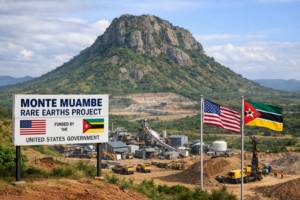 , marking the third significant US investment in the country’s natural resources sector since 2024. This move underscores Washington’s push to secure alternative supplies of critical minerals amid global efforts to diversify away from China-dominated supply chains.
In a recent market update from Altona Rare Earths PLC, a London-listed company specializing in critical raw materials exploration in Africa, the firm announced that the US Trade and Development Agency (USTDA) has confirmed its support for the Monte Muambe project. While specific funding amounts remain undisclosed, the backing aims to outline the technical and financial roadmap for development, focusing on rare earth elements essential for high-strength permanent magnets, defense technologies, and clean energy applications such as electric vehicles and wind turbines.
USTDA Deputy Director and Chief Operating Officer Thomas Hardy affirmed this commitment during a high-level meeting on US support for critical mining projects in sub-Saharan Africa, held in Cape Town, South Africa, on February 8, 2026. The support is contingent on finalizing a formal grant agreement, which is currently in preparation.
Altona, which holds a 51% stake in the project (set to increase to 70% upon completing a prefeasibility study), estimates the development cost at approximately $276.3 million. The mine is projected to produce around 15,000 tonnes of mixed rare earth carbonate annually over an 18-year lifespan, with ongoing reviews potentially refining these figures. The company anticipates results from its latest drilling campaign for fluorite and gallium soon, which could further validate the project’s viability as a source of these strategic materials.
Gallium, a rare metal used in semiconductors, radars, and LEDs, was discovered in high concentrations (up to 232 grams per tonne) at Monte Muambe in April 2025. With prices hovering around $250 per kilogram amid US-China trade tensions, this adds to the site’s appeal. Fluorite, another key component, enriches the carbonatite deposits within the 780-meter-high volcano’s six-kilometer-wide caldera, which features a 200-meter-deep crater.
This investment follows two prior US commitments: In 2024, the US International Development Finance Corporation (DFC) approved $150 million for Syrah Resources’ Balama graphite mine in northern Mozambique, supplying materials for electric vehicle batteries. In 2025, the US Export-Import Bank (EXIM) greenlit $4.7 billion in financing for TotalEnergies’ liquefied natural gas (LNG) megaproject in Cabo Delgado.
Altona’s CEO, Cedric Simonet, described the US endorsement as “a powerful external validation of the strategic quality and economic potential” of Monte Muambe. He emphasized its role in fostering resilient global supply chains for rare earths and fluorite, aligning with broader US initiatives like the 2026 Critical Minerals Ministerial, where the US announced over $30 billion in commitments to secure strategic minerals worldwide.
As global demand for rare earths surges driven by the energy transition and defense needs projects like Monte Muambe position Mozambique as a key player in Africa’s critical minerals boom, potentially attracting further international partnerships.
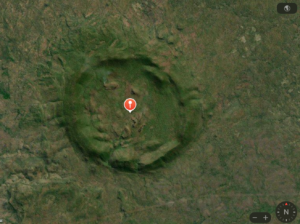
Mount satellite image
Analysis:
Impacts on Mozambique’s Security Environment
Mozambique’s security landscape in 2026 remains complex, marked by lingering insurgent threats in the northern Cabo Delgado province, post-election instability from 2024-2025, and broader challenges like kidnappings, corruption, and climate-induced vulnerabilities. The US-backed Monte Muambe rare earths project, located in the relatively stable central Tete province, could positively influence national security dynamics through economic stabilization, job creation, and enhanced international cooperation, though it also carries risks if not managed carefully.
Positive Impacts and Improvements
- Economic Growth and Stability as a Security Buffer:
Foreign direct investment (FDI) in mining and energy sectors is projected to reach a record $5.88 billion in 2026, a 22.6% increase, largely driven by LNG and critical minerals projects like Monte Muambe. This influx could generate thousands of jobs, boost local infrastructure (e.g., roads, power, and water systems), and increase government revenues, reducing poverty-driven unrest. Tete’s central location, away from Cabo Delgado’s Islamist insurgency, allows for safer operations, potentially serving as a model for secure resource development.
- Enhanced US Security Cooperation:
US investments often come with tied security support, as evidenced by DFC and EXIM’s involvement in prior projects. The Monte Muambe backing aligns with US counterterrorism priorities in Africa, potentially leading to increased training, intelligence sharing, or funding for Mozambican forces under frameworks like the Global Fragility Act. This could help contain the Islamic State-linked insurgency in the north, which has displaced over a million people and disrupted $20 billion in LNG investments since 2017. Improved security in resource-rich areas would protect US-backed assets and encourage more FDI, creating a virtuous cycle.
- Geopolitical Diversification and Reduced External Vulnerabilities:
By partnering with the US to develop rare earths, Mozambique reduces reliance on Chinese-dominated markets, which control over 80% of global supply. This strategic pivot could attract allied investments from Europe and Japan, enhancing diplomatic leverage and security alliances. Regional stability efforts, including Rwandan troop deployments in Cabo Delgado, might gain momentum if economic stakes rise, indirectly benefiting Tete through national resource revenue sharing.
- Local Community Benefits and Conflict Prevention:
Projects like Monte Muambe emphasize community development, potentially funding education, health, and anti-poverty programs in Tete, addressing root causes of insecurity like inequality and youth unemployment. Successful implementation could build public trust in government and foreign investors, reducing risks of protests or sabotage seen in post-2024 election unrest.
Potential Risks and Challenges
- Resource Curse and Localized Tensions:
Rapid resource development can exacerbate corruption, environmental degradation, and inequality, fueling grievances if benefits aren’t equitably distributed. In Tete, mining has historically led to land disputes and pollution; similar issues at Monte Muambe could spark local conflicts, potentially drawing insurgent groups southward.
- Spillover from Northern Insecurity:
While Tete is stable, Cabo Delgado’s violence threatens supply chains and investor confidence nationwide. If insurgents target critical infrastructure, Monte Muambe’s viability could suffer, delaying economic gains and worsening fiscal pressures.
- Geopolitical Rivalries:
US involvement might intensify competition with China or Russia, leading to proxy tensions or cyberattacks on projects. Post-election dialogues in 2025 aim to stabilize politics, but without inclusive reforms, instability could deter FDI.
Overall, the Monte Muambe project is likely to be net-positive for Mozambique’s security by driving economic resilience and international partnerships, provided the government prioritizes transparent governance, community engagement, and robust counterinsurgency measures. Projections suggest FDI-led growth could stabilize reserves and reduce debt burdens by 2026-2027, indirectly bolstering national security. However, without addressing underlying issues like corruption and regional disparities, it risks amplifying existing vulnerabilities.
========= =========
Northern Cabo Delgado Security Situation
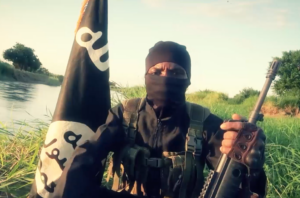
Period under review: January-February 2026
Coverage: Mocímboa da Praia, Macomia, Quissanga, offshore islands
Situation Overview
Islamic State-Mozambique (ISM) remains operationally resilient and tactically adaptive in northern Cabo Delgado, sustaining pressure on Mozambican security forces through coordinated ground and maritime actions, targeted raids, and exploitation of governance, intelligence, and humanitarian gaps. Recent clashes in Catupa forest, Muissune Island, and Macomia district demonstrate ISM’s continued capacity to contest state control along key transport corridors (N380) and coastal approaches, despite the joint Mozambican–Rwandan operations.
Simultaneously, flooding, cholera outbreaks, and population displacement are degrading state response capacity, compounding insecurity, and creating conditions that favor insurgent concealment, recruitment, and mobility.
Tactical Developments
ISM Offensive Operations in Catupa Forest
On 31 January, ISM launched simultaneous attacks on two Mozambique Defense Forces (FADM) positions at Namabo and Catupa, east of Quinto Congresso village and adjacent to the N380 national highway. The attack on Catupa continued into 1 February, with fighting resuming again on 7–8 February as FADM attempted to reassert control.
- IS media claimed nine FADM fatalities.
- Mozambican authorities confirmed five insurgents killed.
- ISM has been entrenched in Catupa forest since 2022, despite repeated ground and air operations by Mozambican and Rwandan forces.
These camps are isolated, difficult to resupply, and tactically exposed, connected only by a rough track constructed in late 2022. ISM’s objective is not territorial control, but rather:
- Seizure of military materiel
- Disruption of state operations
- Psychological pressure on isolated troops
- Erod population trust
- Financial control over mineral areas
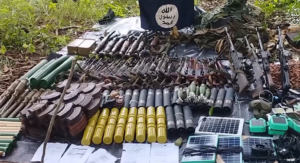
Captured weapons displayed by IS include mortars, RPGs, automatic rifles, and machine guns, confirming that arms capture has become a core operational enabler for ISM.
Control over Maritime and Coastal Activity in Mocímboa da Praia
30 January, a FADM naval patrol clashed with ISM terrorists around Muissune (Suna) Island, approximately 24 km offshore from Mocímboa da Praia port. At least three terrorists were killed, marking the second clash at the island in January. A week earlier, ISM fired on a naval patrol, missing its target.
In parallel:
- ISM terrorists entered Nanquidungaa village, south of Mocímboa da Praia, looted food supplies, and withdrew without violence.
- A Rwandan patrol responded, but no engagement occurred.
These incursions highlight ISM’s dual maritime land posture, allowing it to threaten ports, fisheries, and sea lines of communication while maintaining freedom of movement inland.
Economic and Civilian Impact
Macomia illustrates the convergence of insurgency, criminality, and alleged security force abuse:
- 26 January, the premises of trader Ali Maridade were looted and burned. The attack occurred in a supposedly secured central area, raising concerns about protection failures or collusion.
- 2 February, ISM terrorists stopped commercial vehicles near Manica village (Macomia–Mucojo road), extorting passengers and traders up to 30,000 meticais per person, exploiting the absence of escorts.
This environment:
- Increases the cost of doing business
- Undermines confidence in state protection
- Risks pushing communities toward accommodation with insurgents
Failed Intelligence and Coordination Breakdown
31 January, security forces detained approximately 30 young individuals in Tandanhangue (Quissanga district) on suspicion of insurgent links. The group later confirmed to be football players traveling from Pangane to Quirimba Island, they were transferred to Ibo Island, then released.
Consequences:
- Upon return, retaliatory violence erupted in Pangane, targeting residents of Quirimba origin.
- Homes were destroyed, deepening inter-communal tensions.
This incident underscores systemic intelligence failures:
- Poor community intelligence vetting
- Lack of coordination between local authorities, communities, and security forces
- Reactive profiling replacing targeted, evidence-based intelligence
Such actions directly fuel grievances, weaken trust, and risk creating new recruitment pathways for ISM.
The Fight for Catupa Forest
Catupa forest occupies a strategic wedge:
- West: N380 highway
- East: Indian Ocean
- North: Messalo River valley
After the insurgents were being displaced from Messalo in 2021, ISM repositioned into Catupa, forcing FADM to establish static positions in 2022. Since then:
- At least five major assaults on these bases have occurred.
- Rwandan air and ground interventions (2022, 2024, 2025) have been temporary and non-decisive.
The continued manning of isolated bases raises strategic questions:
- They do not exert effective area control
- They remain logistical liabilities
- They provide ISM with recurring opportunities for arms capture
LNG Restart Under Persistent Threat
The formal relaunch of the $20 billion Mozambique LNG project by TotalEnergies in Afungi, Palma district, with production targeted for 2029, marks a major economic milestone. However:
- Persistent insecurity along the N380 corridor
- ISM’s continued maritime presence
- Weak intelligence coordination inland
represent latent strategic risks to logistics, workforce movement, and investor confidence, particularly if insurgents seek to reassert relevance through high-impact attacks.
Natural Calamities and Security Consequences
Floods and Cholera
Mozambique is facing severe flooding, particularly affecting Cabo Delgado, Nampula, and Tete, with cascading effects:
- Population displacement, increasing civilian movement through insecure areas
- Degraded road access, limiting security force mobility and resupply
- Strained health services, amid a cholera outbreak nearing 5,000 suspected cases
In Cabo Delgado, misinformation surrounding cholera response led to the vandalism of a health center in Montepuez, highlighting:
- Fragile state–community trust
- High susceptibility to rumors and manipulation
Security perspective, floods:
-
- Reduce surveillance and patrol effectiveness
- Create humanitarian cover for insurgent movement
- Divert state attention from counter-insurgency to emergency response
Analysis
The current security environment in Cabo Delgado reflects not an insurgent resurgence, but a failure to consolidate military gains. ISM’s strength lies less in numbers and more in its ability to:
- Exploit intelligence gaps
- Leverage isolated military deployments
- Manipulate civilian grievances
- Operate across land–sea–humanitarian seams
The lack of effective intelligence coordination between communities, local authorities, FADM, Rwandan forces, and humanitarian actors such as SADC Emergency Response Team (ERT) remains the most critical vulnerability. Floods and public health crises further degrade situational awareness, fragment command-and-control, and expand ungoverned spaces.
Unless intelligence-led operations replace reactive deployments, and unless civilian trust is restored through disciplined, coordinated security conduct, ISM is likely to sustain low-cost, high-impact operations, particularly along the N380, Catupa forest, and coastal/island zones, undermining stabilization efforts and placing long-term investments at risk.
=====