President Daniel Chapo Calls for Disruption of Terrorist Maritime Supply Lines
The President of the Republic of Mozambique and Commander-in-Chief of the Defence and Security Forces (FDS), Daniel Chapo, has called for the immediate disruption of terrorist logistical supply lines and greater operational dynamism in combating criminality through innovative strategies aimed at strengthening national security.
Addressing Rear Admiral Estevão Bernardo Nchokomala, newly appointed Commander of the Mozambique Navy, the President underscored the Navy’s central role in safeguarding national sovereignty, territorial integrity, and the protection of Mozambique’s extensive coastline. He highlighted responsibilities including maritime resource protection, security of navigation routes, and the fight against transnational threats such as terrorism, maritime piracy, human trafficking, drug trafficking, arms smuggling, and organized crime.
Within the framework of counterterrorism operations in Cabo Delgado, the Mozambique Navy is expected to assume a decisive role in coastal surveillance, maritime domain control, joint operations support, and, critically, the disruption of logistical supply routes sustaining terrorist elements.
The President stressed that effective maritime domain control is now a determining factor for the success of broader stabilization, pacification, and sustainable development strategies in Cabo Delgado and the country at large.
Blocking IS-M Maritime Logistics
For the newly appointed commandant, neutralizing the maritime logistical corridors used by Islamic State Mozambique requires a shift from reactive patrol patterns to intelligence-driven maritime interdiction.
IS-M has historically exploited Mozambique’s porous northern coastline, informal landing sites, mangrove estuaries, and fishing networks to move personnel, weapons, fuel, and supplies between coastal districts and offshore points. Small dhows and artisanal fishing vessels provide low-signature transport, complicating detection through conventional naval patrols.
To effectively block these routes, the Navy must integrate layered maritime domain awareness: coastal radar coverage, automatic identification systems (AIS) enforcement, drone-based ISR, and human intelligence penetration of coastal communities. Joint littoral operations with marine units and rapid-reaction forces are essential to interdict landing points rather than merely patrol open waters, which as long proven impossible.
Additionally, disrupting financial flows tied to maritime smuggling, fuel diversion, illicit timber, and narcotics will weaken IS-M’s logistical resilience. Cooperation with regional partners in the SADC, SADC SO such Regional Early Warning Centre and Regional Counter Terrorism Centre is equally critical, given cross-border movement through Tanzanian corridor and Indian Ocean corridors.
Failure to secure these maritime arteries risks allowing IS-M to retain operational depth, resupply capacity, and tactical mobility. Conversely, sustained maritime interdiction would significantly constrain insurgent endurance and recalibrate the operational balance in Cabo Delgado.
M23 Rebel Group Spokesperson Willy Ngoma Killed in North Kivu Drone Strike
The Use of Drones in DRC
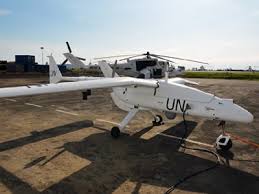
February 24, the spokesperson of the M23 rebel group, Willy Ngoma, was reportedly killed in a drone strike conducted by the Armed Forces of the Democratic Republic of Congo (FARDC) in Rubaya, North Kivu. The strike occurred at approximately 3:00 a.m. in Rubaya, a town of major strategic importance due to its coltan mines, which account for an estimated 15 per cent of global supply. The operation reportedly followed several days of sustained drone activity in the area.
Ngoma’s reported death comes amid the implementation of a Qatar-mediated ceasefire between Kinshasa and M23, including the establishment of a joint monitoring and verification mechanism supported by observers from Qatar, the United States, and the African Union. Although M23 has not formally confirmed his death, statements from another M23 spokesperson, Lawrence Kanyuka, acknowledged the drone strikes, indirectly reinforcing the operational context of the incident.
Drone Usage in the Democratic Republic of Congo
Drone deployment in the Democratic Republic of Congo has evolved significantly over the past two decades. Initial use dates back to 2006, when European forces and Belgian troops introduced surveillance drones in Kinshasa to support the UN mission. That early phase was halted after one drone was shot down and another crashed into a civilian house.
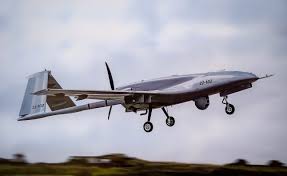
December 2013, MONUSCO formally integrated surveillance drones as a mission asset, deploying five Falco EVO drones in Goma to monitor border areas and track armed groups such as M23. From 2019 onward, humanitarian actors including VillageReach and Swoop Aero began medical drone trials in Équateur province, with routine deliveries expanding in 2021 under the Drones for Health program across more than 22,000 square kilometers.
From late 2023 to early 2025, FARDC significantly accelerated its drone capabilities, acquiring Turkish Bayraktar TB2 systems and Chinese Wing Loong II platforms. These acquisitions enhanced precision-strike capacity and real-time intelligence gathering in areas such as Masisi, Walikale, Rutshuru, Lubero, Kalehe, Mwenga, and Minembwe.
Warfare Transformation and Rebel Adaptation
The Congo River Alliance (AFC), a coalition that includes M23, has reportedly deployed kamikaze drones in offensive operations, including the attack on Kisangani Bangoka International Airport in northeastern DRC. The AFC/M23 claimed responsibility for strikes conducted between January 31 and February 1, targeting a FARDC military command center coordinating operations against AFC/M23 positions in occupied areas.
Reports indicate the use of more than ten kamikaze drones in a single coordinated attack, signaling a doctrinal shift toward asymmetric aerial warfare. There are also reports suggesting that the Islamic State Central Africa Province (ISCAP) is operating in areas from Ituri to South Kivu, particularly in resource-rich zones, and may be adapting similar drone-based tactics.
Islamic State affiliated groups increasingly utilize commercial and modified drones for reconnaissance, propaganda, and weaponized attacks. This trend, observed in other African theaters such as the Lake Chad Basin, reflects a broader tactical evolution. Should such capabilities expand further in eastern DRC and diffuse into the SADC region, including Mozambique, the operational environment will shift substantially. The weaponization of drones by insurgent actors has the potential to intensify attacks on military camps, infrastructure, and civilian settlements, thereby complicating stabilization efforts and eroding state authority in contested territories.
On Sunday the 22nd, two individuals were reportedly kidnapped during an unclaimed armed ambush along the N380 corridor round Nova Zambeze village, on the Pemba–Mueda route in Cabo Delgado province. A ransom payment of 200,000 meticais was demanded from the transport company.
The incident occurred when suspected IS-M attack cell carried out an unclaimed armed ambush targeting a cement truck traveling northbound. According to available information, the attack appeared deliberate and selective, the truck was singled out, while other vehicles were reportedly allowed to pass without interference. The assailants forced the driver to stop under gunfire and demanded payment as a condition for the release of the vehicle, cargo, and detained individuals. No fatalities were confirmed.
IMPLICATIONS AND ANALYSIS
The N380 remains a strategic supply artery connecting coastal Pemba to inland districts such as Mueda, supporting both commercial distribution and security deployments. The precision of the targeting amid reports that other motorists accelerated through the area to avoid interception raises concerns about prior intelligence gathering. The selective nature of the ambush suggests potential pre-attack surveillance or the use of spotters positioned along transit nodes such as fuel stations, checkpoints, or commercial loading points.
Although the attack has not been claimed, it contributes to a broader pattern of coercive disruption along Cabo Delgado’s Road network. Such operations blur the line between insurgent activity and organized criminality, generating revenue through ransom and intimidation while undermining confidence in state protection mechanisms. Recurrent interdictions along secondary and non-escorted routes indicate persistent gaps in area dominance beyond fixed convoy protection models.
Importantly, this incident follows the 23rd attack along the Macomia–Awasse axis, after which authorities temporarily suspended military escorts in both directions. The suspension created congestion, disrupted trade flows, and heightened anxiety among transport operators. When escorts are withdrawn even temporarily it signals contested control of key corridors and provides armed groups with greater operational latitude. The cumulative effect is increased transport costs, supply delays, and the normalization of risk premiums along the N380 and adjacent routes.

If escort suspensions persist or are perceived as inconsistent, commercial actors may resort to informal protection arrangements or adjust movement patterns in ways that further weaken centralized security control. Strategically, the combination of targeted ambushes and forced escort suspensions amplifies insurgent leverage, reinforcing narratives of state vulnerability while expanding opportunities for coercive taxation and kidnapping along critical logistical corridors.
N380 Military Convoy Attacked by Islamic State Mozambique (ISM)
Updated report on the armed attack attributed to Islamic State Mozambique targeting a military-escorted convoy along the N380 corridor in Macomia district, Cabo Delgado province.
The incident occurred near the village of V Congresso, Chai administrative post, as vehicles traveling under military escort on the Macomia–Awasse axis came under firearm unclaimed attack by IS-M. The attack resulted in two fatalities both adult males including the driver of one of the targeted vehicles. Several individuals were injured.
In addition to the casualties, assailants looted commercial goods transported in the trucks. Some of the attacked vehicles reportedly remained at the scene as of the morning of the 23rd, reflecting both the intensity of the ambush and limited immediate recovery capacity.
Following the incident, authorities temporarily suspended military escorts along the Macomia–Awasse route in both directions. This decision led to significant congestion of vehicles in the towns of Macomia and Awasse, disrupting trade flows and civilian mobility along one of the province’s most critical supply corridors.
Operational Implications
The temporary cancellation of escorts carries broader security and socio-economic consequences. The N380 is a strategic artery linking northern and central Cabo Delgado; interruptions reinforce perceptions of territorial contestation and insurgent freedom of movement. Prolonged suspension risks deepening local grievances, particularly among transporters and traders who depend on escorted convoys for safe passage.
There is also a growing perception among segments of the population that escorted movement prioritizes cargo or convoys associated with political or military interests over ordinary commercial activity. If unaddressed, such narratives may erode trust in state protection mechanisms and create exploitable information space for insurgent propaganda.
Strategically, the attack demonstrates continued insurgent capacity to interdict secured movement along key logistical routes, underscoring the need for adaptive convoy protection measures, route clearance operations, and enhanced area dominance beyond fixed escort models.
LOGISTICAL CONSTRAINTS HINDER EXPANSION OF THE LOCAL DEFENCE FORCE IN CABO DELGADO
On 21 February, the spokesperson of the Local Defence Force deployed in counter-terrorism operations in Cabo Delgado, Gabriel Cassimuca, stated in the district of Mueda that the force is facing significant constraints in expanding its presence across the province due to shortages of financial resources, material means, and food supplies.
The remarks were made during a food donation event promoted by the Secretary-General of FRELIMO, Chakil Aboobacar. On that occasion, Cassimuca reiterated that the Local Force intends to extend its operational footprint to southern districts such as Balama, Namuno, and Mecúfi areas considered strategically sensitive in light of the risk of insurgent infiltration and dispersion.
Despite these limitations, the Local Defence Force has maintained operational coordination with the Mozambican Defence and Security Forces (FDS), participating in joint patrols, stabilization efforts, and territorial control operations, particularly in zones previously affected by the Islamic State de Mozambique.
Beyond food shortages, the force has also raised concerns regarding the lack of adequate weaponry, communications equipment, transport assets, and irregularities in the disbursement of subsidies to its members many of whom are veterans of the liberation struggle, their descendants, and local volunteers.
In Mueda, a curfew imposed from 20:00 has been justified as a preventive security measure and is viewed as having contributed to maintaining stability in a town that has not experienced direct terrorist attacks since the onset of the insurgency.
ANALYSIS
The Local Defence Force has assumed responsibilities traditionally attributed to military and police structures, including access control, searches, preliminary detentions, and support to both offensive and defensive operations in coordination with the Mozambican Armed Defence Forces (FADM) and Rwandan contingents.
The visit of the President of the Republic, Daniel Chapo, to Mueda on 27 February 2025 reinforced political and institutional recognition of the Local Force, highlighting its legal framework and role in community-based territorial defence.
However, its long-term consolidation as a complementary security actor depends on deeper institutionalization, clearer mandates, operational discipline, and sustainable logistical support. The politicization of its activities could undermine internal cohesion and weaken strategic coordination with the FADM. In the context of a mobile and asymmetric insurgency, the effectiveness of the Local Defence Force remains directly linked to its structured integration within the national security architecture.
Driving Tangible Progress Against Terrorism
President Daniel Chapo stated that he expects to see and feel measurable progress in the fight against terrorism in Cabo Delgado during the official opening of the 2026 Military Operational Year.
The President commended the efforts of the Armed Forces and emphasized the need to reinforce protection of critical infrastructure, strategic natural resources, logistical and development corridors, the Mozambique Channel, as well as national air, land, and maritime domains. He framed these priorities as central pillars of military action in 2026, underscoring that national defense must directly safeguard the Mozambican people and the country’s long-term development trajectory.
“This year, we want to see and feel concrete progress in the fight against terrorism. Every soldier must recognize that they are an active participant in shaping the nation’s destiny, because the homeland is not an abstraction. It is our people. It is the future we are building together,” he stated.
President Chapo stressed that the Ministry of National Defense and the General Staff of the Armed Forces must treat counterterrorism as a strategic mission, ensuring that terrorism does not undermine Mozambique’s broader objective of achieving economic independence. At the same time, he cautioned against neglecting other dimensions of national security, calling for an integrated approach grounded in rigorous planning and disciplined execution.
He directed the Armed Forces of Mozambique (FADM) to define, stratify, and prioritize threats facing the state, placing counterterrorism at the top of the defense agenda while remaining attentive to other security challenges. As an example, he referenced Manica Province where the ceremony took place which has faced violent criminal activity by groups locally referred to as “homem catana,” (panga men) as well as increased influxes of individuals from various countries seeking gold exploitation opportunities.
ANALYSIS
“See and Feel” measurable progress in the fight against terrorism in Cabo Delgado. While the President’s intent reflects strategic urgency, the broader challenge extends beyond kinetic military success. Counterterrorism is not solely a task for the armed forces. Hard, purely kinetic approaches though necessary to neutralize immediate threats do not address structural drivers of radicalization. Mozambique has reached a point where progress depends significantly on political will to confront governance gaps, institutional weaknesses, and socioeconomic marginalization in Cabo Delgado.
The prolonged militarization of the conflict risks institutional fatigue and strategic dilution. When counterterrorism becomes normalized as a permanent condition, the threat gradually embeds into daily life, reducing national urgency and enabling adaptive insurgent tactics. In Cabo Delgado, many communities perceive the visible presence of armed force but limited parallel expansion of civilian state institutions focused on social equity, service delivery, and economic inclusion. This perception fosters alienation. Populations often feel trapped between insurgent coercion and military operations, weakening cooperation with security forces.
Large-scale economic projects in the Afungi basin and extractive sectors have intensified this perception. Communities frequently believe that military deployments prioritize protection of foreign investments rather than local livelihoods. Meanwhile, small-scale traders and transporters along corridors such as the N380 reportedly face taxation and looting by insurgent elements, with limited consistent protection. Where security presence is perceived as selective, grievances deepen.
Operationally, coordination gaps between the Mozambican Armed Forces (FADM), Rwandan forces, and Tanzanian elements in the Rovuma basin have complicated intelligence fusion and unified command structures. Fragmented external support and visibility competition among partners contributed to the withdrawal of the Southern African Development Community Mission in Mozambique, underscoring the difficulty of sustained regional alignment.
Reconstruction challenges persist in districts such as Macomia, affected by both insurgency and Cyclone Kenneth. Institutions including ADIN, INGD, INAS, and provincial state offices must demonstrate visible, equitable service delivery to rebuild trust. Ultimately, reversing Cabo Delgado’s trajectory requires a whole-of-state approach balancing calibrated military pressure with accountable governance, economic inclusion, and community-centered resilience. Without that balance, tactical gains risk strategic stagnation.
N380 Military Convoy Attacked by Islamic State Mozambique (ISM)
On February 22nd, three individuals sustained serious injuries, several others suffered minor injuries, and military vehicles and various food supplies were seized following an unclaimed armed attack by an attack-cell of ISM. The group conducted an armed armed ambush against military escort from Macomia to Auasse locality early Sunday afternoon.
The attack occurred around Quinto Congresso village, the administrative post of Chai, within the Macomia district. It resulted in both serious and minor injuries, which were subsequently treated by members of the Defense and Security Forces and transported to the Macomia-central hospital. Following the incident, Defense and Security forces launched a counter-offensive, leading to over thirty minutes exchanging gunfire. There are no reports of terrorists killed or wounded.
This ambush resulted in the closure of the national highway N380 until this Monday, February 23rd, date of this report. Local residents described heightened security presence and continued disruption to travel routes.
Witnesses reported that the ISM cell, operating with apparent agility, skillfully positioned themselves for the ambush, taking advantage of the relatively remote terrain surrounding the Quinto Congresso area. The attack highlights the ongoing security challenges faced by DSF in Cabo Delgado, where the ISM group has been terrorizing local communities and eroding the trust among government authorities and local residents.
The incident underscores the vulnerability of military convoys operating in the region and the need for continued vigilance and enhanced security measures. Authorities are on the circumstances surrounding the attack and assessing the group’s capabilities and intentions.
The closure of the highway continued to impact local trade and supply chains, raising concerns about the humanitarian situation in surrounding communities.
Further updates are expected as the DSF progresses with operations.
ISLAMIC STATE OF MOZAMBIQUE, KIDNAPS EIGHT INDIVIDUALS IN MOCÍMBOA DA PRAIA
Eight people, including two fishermen, were kidnapped in Mocímboa da Praia, Cabo Delgado, on Friday, October 20th, during an unclaimed armed attack by the Islamic State of Mozambique (IS-M). The group had been operating freely in the vicinity of Kitope and Anga communities since last thursday, reportedly targeting local residents.
Reports suggests that all eight victims, believed to be men, were likely recruited by the terrorists to assist in retrieving a stranded vessel along the coast or transporting their goods. EWRAC-HUMINT sources indicate that during Ramadan, the IS-M intensified their presence and movements, particularly in Mocímboa da Praia’s islands including Nhonge and Makulo, seeking food supplies.
Two weeks prior to this attack, the terrorists traveled to Anga village were forcibly purchased food from residents.
Residents describe a relatively normal life in Mocímboa da Praia despite ongoing challenges with basic services and infrastructure, although there is concern about potential collaboration between insurgents and the population, which could indicate the impending release of the hostages, as the group has not engaged in violence against civilians.
Tanzanians terrorists detained in Puntland
A total of at least twelve Tanzanians have been detained or killed for involvement in Al–Shabaab and Islamic State terrorist ranks between December 2024 and February 2026, reflecting a sustained pattern of Tanzanian presence within transnational jihadist structures operating in East Africa.

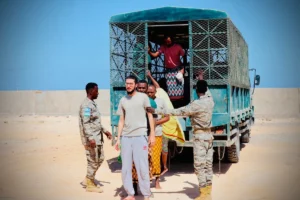
On 31 December 2024, two Tanzanians were part of a 12 member all foreign-fighter unit that carried out a complex assault on a Puntland military base under the banner of Islamic State in Somalia, employing two VBIEDs in what was assessed as one of the group’s most sophisticated operations. On 25 November 2025, two additional Tanzanians were among militants killed during a raid on ISIS positions in the Bakue and Mareero sectors of the Qal Miskaad ridge. On 18 January 2026 in Bosaso, six Tanzanians were captured during the Al-Miska’ad counteroffensive conducted by Puntland Security Forces with U.S. support. Separately, in February 2026, two Tanzanian nationals were detained in Kenya’s Kajiado County in a disrupted plot linked to Al-Shabaab.

This cumulative pattern does not suggest isolated radicalization incidents but rather structured recruitment and facilitation pipelines. Puntland authorities have confirmed that foreign fighters constitute a significant proportion of IS-Somalia’s manpower, with Ethiopians, Yemenis, and Tanzanians ranking among the largest contingents. The Cal Miska’ad mountains host the al-Karrar coordination directorate responsible for linking Islamic State affiliates across Central, Eastern, and Southern Africa, including operational theaters in Mozambique and eastern DRC. This elevates the strategic relevance of Tanzanian recruits beyond Somalia.
Tanzania’s geographic positioning between the East African Community and SADC trade corridors, its coastline along the Indian Ocean, and porous land borders create mobility environments exploitable by extremist facilitators. Recruiters, including elements associated with clandestine intelligence structures such as Amniyat and al emni, have historically used deceptive employment offers, religious study pathways, and cross-border transit channels to draw economically vulnerable individuals into external training ecosystems.
The recurring Tanzanian presence should therefore be assessed within a broader regional architecture of recruitment, transit, and financial facilitation rather than framed narrowly as domestic radicalization alone. Puntland’s operations degrade tactical nodes in Somalia, but the structural recruitment drivers remain regionally distributed and strategically interconnected.
https://ewrac.org/analysis/u-s-airstrikes-in-al-miskaad/
https://ewrac.org/analysis/kajiado-county-counterterrorism-operation/
U.S. Airstrikes in Al-Miskaad
On 16-17 February 2026, Islamic State–linked terrorists were detained during ongoing counterinsurgency operations in the Al-Miskaad mountain range of Puntland, northeastern Somalia. Puntland security forces, under the HILAAC Operation, captured a suspected foreign fighter in the Tasjiic area of Bari region, while near-simultaneous air operations by United States Africa Command targeted ISIS hideouts approximately 70 kilometers southeast of Bosaso. The terrorists were described as a foreign national affiliated with Islamic State in Somalia.
The detention is operationally significant because Al-Miskaad has functioned as a hardened sanctuary for ISIS-Somalia’s and Karrar leadership, training cadres, and financial intermediaries. Puntland’s sustained ground pressure, reinforced by external air support, reflects an effort to dismantle command-and-control infrastructure rather than merely disrupt isolated cells. However, the capture of a foreign fighter reinforces the transnational recruitment model underpinning ISIS-Somalia’s and Karrar resilience.
For SADC region, the implications are indirect but material. ISIS in Somalia has increasingly been assessed as a financial and facilitation node within the wider Islamic State network in Africa. When pressure intensifies in one theater, displacement effects frequently occur. Fighters, logisticians, or financiers may redirect toward comparatively permissive environments, including northern Mozambique or eastern DRC, where extremist ecosystems have previously demonstrated absorptive capacity.
Maritime geography further elevates the strategic relevance. Bosaso’s access to Gulf of Aden shipping lanes intersects with Indian Ocean trade corridors that ultimately connect to Eastern and Southern Africa. Disruption in Puntland could fragment networks into smaller, mobile cells capable of embedding along transit routes through Kenya and Tanzania before projecting influence southward.
While the operation represents a tactical success for Puntland authorities and their partners, its broader consequence for SADC lies in anticipatory preparedness. Enhanced financial intelligence coordination, maritime surveillance, and cross-border monitoring become critical to mitigating secondary diffusion. The strategic question is not whether ISIS in Somalia is weakened locally, but whether its networked architecture adapts regionally by shifting southwards.