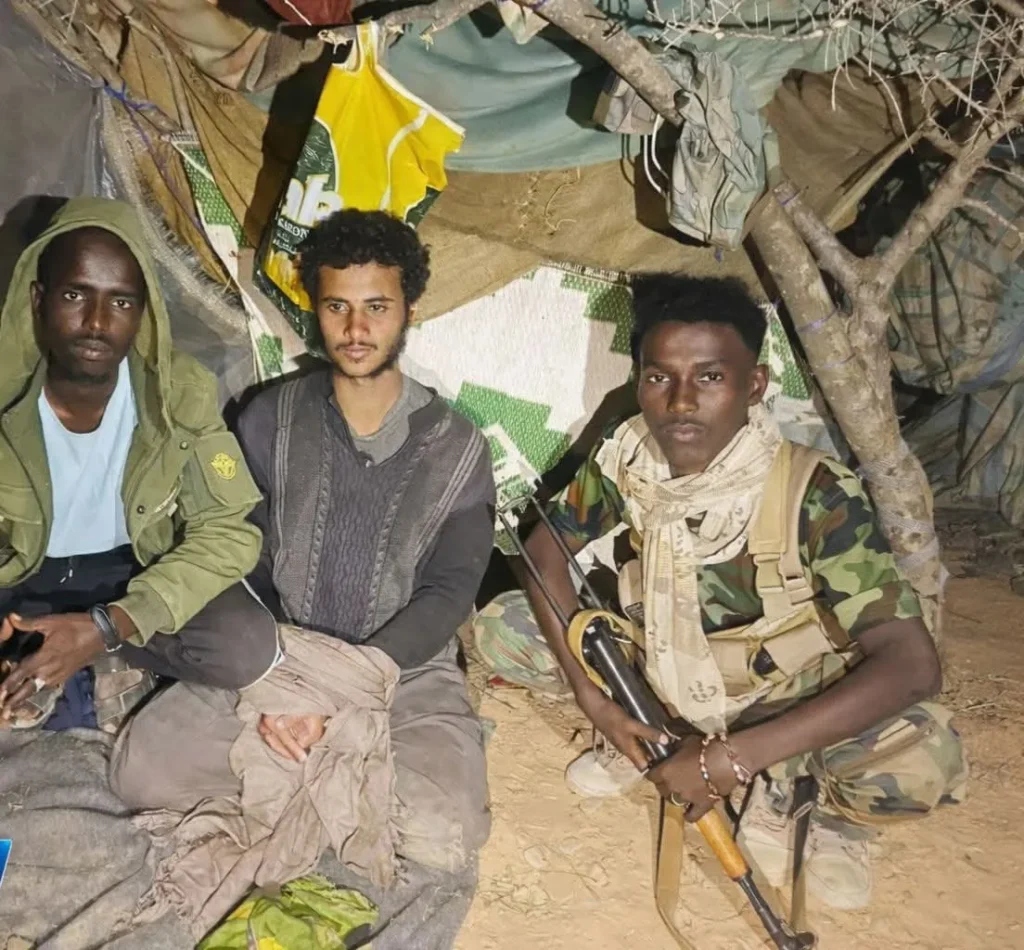
On 16-17 February 2026, Islamic State–linked terrorists were detained during ongoing counterinsurgency operations in the Al-Miskaad mountain range of Puntland, northeastern Somalia. Puntland security forces, under the HILAAC Operation, captured a suspected foreign fighter in the Tasjiic area of Bari region, while near-simultaneous air operations by United States Africa Command targeted ISIS hideouts approximately 70 kilometers southeast of Bosaso. The terrorists were described as a foreign national affiliated with Islamic State in Somalia.
The detention is operationally significant because Al-Miskaad has functioned as a hardened sanctuary for ISIS-Somalia’s and Karrar leadership, training cadres, and financial intermediaries. Puntland’s sustained ground pressure, reinforced by external air support, reflects an effort to dismantle command-and-control infrastructure rather than merely disrupt isolated cells. However, the capture of a foreign fighter reinforces the transnational recruitment model underpinning ISIS-Somalia’s and Karrar resilience.
For SADC region, the implications are indirect but material. ISIS in Somalia has increasingly been assessed as a financial and facilitation node within the wider Islamic State network in Africa. When pressure intensifies in one theater, displacement effects frequently occur. Fighters, logisticians, or financiers may redirect toward comparatively permissive environments, including northern Mozambique or eastern DRC, where extremist ecosystems have previously demonstrated absorptive capacity.
Maritime geography further elevates the strategic relevance. Bosaso’s access to Gulf of Aden shipping lanes intersects with Indian Ocean trade corridors that ultimately connect to Eastern and Southern Africa. Disruption in Puntland could fragment networks into smaller, mobile cells capable of embedding along transit routes through Kenya and Tanzania before projecting influence southward.
While the operation represents a tactical success for Puntland authorities and their partners, its broader consequence for SADC lies in anticipatory preparedness. Enhanced financial intelligence coordination, maritime surveillance, and cross-border monitoring become critical to mitigating secondary diffusion. The strategic question is not whether ISIS in Somalia is weakened locally, but whether its networked architecture adapts regionally by shifting southwards.