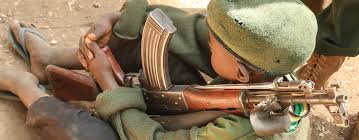
- Incident Overview: National Road 380 (N380) Corridor
The security environment across the primary transit arteries of Cabo Delgado has entered a phase of heightened volatility. Recent kinetic activity by Islamic State Mozambique (IS-M) confirms that the N380 remains the primary focal point for insurgent interdiction operations.
- Date: 16 February, 2026; roadblock ambush armed insurgent utilized child soldiers to establish a road blockade
- Date: February 3, 2026; Location: Road corridor connecting Macomia-sede to the Mucojo Administrative Post; Target: Commercial and passenger transit; Outcome: Establishment of an illegal roadblock and the “sequestration” of vehicles and passengers.
- Date: January 9, 2026; Location: Xitaxi, V Congresso locality (N380 stretch linking Macomia-sede to Oasse); Target: Civilian goods convoy; Outcome: Firearm attack resulting in two wounded civilians (convoy passengers/drivers).
- Primary Targets: Civilian commercial transport, bulk goods convoys, and regional travelers.
- Entities Involved: Hybrid insurgent units (composed of adult militants and armed minors); Mozambique Defence Forces (FADM) as primary escort and security providers.
- Tactical Analysis: Exploitation of Child Soldiers
The blockade on February 16 provided definitive intelligence regarding the composition and tactical deployment of IS-M units. Witness testimony highlights a deliberate shift toward the use of minors to project force and manage logistics.
Witness Observations and Recruitment Profiles
- Operational Execution: Minors were identified as the primary tactical actors responsible for executing the roadblock and the subsequent kidnapping of civilians.
- Psychological Impact of Weaponry: Victims reported that several children were equipped with “two weapons” each. This heavy armament served a dual purpose: increasing the unit’s firepower and serving as a “terror-psychology” tactic intended to shock and demoralize the local population.
- Physiological Limitations: Despite their armament, the recruits demonstrated significant physiological limitations. Witnesses noted the children struggled to manage the physical demands of the raid, specifically showing difficulty transporting heavy bags of looted products and other commercial spoils.
- Linguistic Indicators: The minors utilized Kimuani and Kiswahili for internal coordination and communication with hostages, suggesting regional roots.
- Recruitment Origin: Analytical consensus suggests these recruits were likely forcibly integrated during historical insurgent incursions into villages across the conflict-affected districts.
- Economic Impact and Supply Chain Vulnerability
The persistent targeting of the N380 corridor is systematically degrading the economic resilience of the Mocímboa da Praia District. By exploiting this security lacuna, IS-M is successfully weaponizing market access.
| Disruption Mechanism | Economic Consequence |
| Recurrent Road Closures and Ambushes | Total supply chain failure; disruption of commercial flows essential for basic survival and regional stability. |
| Detention and Seizure of Commercial Goods | Immediate market scarcity, severe price inflation, and a significant reduction in market equity for local populations. |
- Security Provision and Erosion of State Confidence
The failure of formal security apparatuses to protect the N380 corridor even during periods of active escort has profound implications for state legitimacy. The FADM’s inability to neutralize firearm ambushes on protected convoys suggests a tactical mismatch that IS-M continues to exploit.
“Repeated attacks under such conditions risk eroding the confidence of traders, transporters, and civilians in the state’s ability to guarantee safe movement. This perception of insecurity may result in reduced commercial activity or the rerouting of trade away from affected areas.”
- Expansion of IS-M Parallel Governance and Control
As the state’s security guarantee falters, IS-M is institutionalizing its influence through parallel administrative mechanisms. The forced collection of zakat (Islamic tax) has transitioned from a purely ideological imposition to a pragmatic commercial protection racket for transporters. For many, paying the insurgents has become a necessary cost for mobility and asset protection.
This dynamic undermines state authority through three distinct channels:
- Strengthening IS-M Influence: By regulating the movement of essential goods, IS-M exerts direct leverage over the regional economy.
- Reinforcing Parallel Governance: The normalization of zakat payments provides a functional, albeit coercive, administrative alternative to formal state structures.
- Undermining State Authority: Every insurgent-regulated passage through a “secured” corridor demonstrates the government’s lack of territorial and regulatory control.
- Regional Security Threat Assessment
The National Road 380 (N380) has been a recurrent target of IS-M operations since October 2023, with a marked escalation in operational intensity since August 2024. Cabo Delgado has reached a strategic inflection point where the convergence of economic sabotage, the deployment of child soldiers for terror-psychology, and the establishment of parallel taxation systems threatens to permanently displace state authority. The N380 is no longer merely a transport route; it is a contested arterial corridor where state sovereignty is currently secondary to insurgent regulation. Without a significant shift in the security posture, the northern Cabo Delgado region faces an highlikeliness future of total economic isolation and the formalization of IS-M road control.