The Use of Drones in DRC
February 24, the spokesperson of the M23 rebel group, Willy Ngoma, was reportedly killed in a drone strike conducted by the Armed Forces of the Democratic Republic of Congo (FARDC) in Rubaya, North Kivu. The strike occurred at approximately 3:00 a.m. in Rubaya, a town of major strategic importance due to its coltan mines, which account for an estimated 15 per cent of global supply. The operation reportedly followed several days of sustained drone activity in the area.
Ngoma’s reported death comes amid the implementation of a Qatar-mediated ceasefire between Kinshasa and M23, including the establishment of a joint monitoring and verification mechanism supported by observers from Qatar, the United States, and the African Union. Although M23 has not formally confirmed his death, statements from another M23 spokesperson, Lawrence Kanyuka, acknowledged the drone strikes, indirectly reinforcing the operational context of the incident.
Drone Usage in the Democratic Republic of Congo
Drone deployment in the Democratic Republic of Congo has evolved significantly over the past two decades. Initial use dates back to 2006, when European forces and Belgian troops introduced surveillance drones in Kinshasa to support the UN mission. That early phase was halted after one drone was shot down and another crashed into a civilian house.
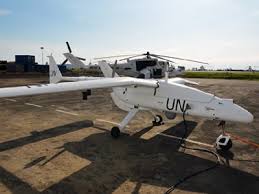
December 2013, MONUSCO formally integrated surveillance drones as a mission asset, deploying five Falco EVO drones in Goma to monitor border areas and track armed groups such as M23. From 2019 onward, humanitarian actors including VillageReach and Swoop Aero began medical drone trials in Équateur province, with routine deliveries expanding in 2021 under the Drones for Health program across more than 22,000 square kilometers.
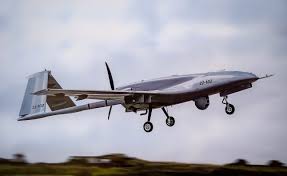
From late 2023 to early 2025, FARDC significantly accelerated its drone capabilities, acquiring Turkish Bayraktar TB2 systems and Chinese Wing Loong II platforms. These acquisitions enhanced precision-strike capacity and real-time intelligence gathering in areas such as Masisi, Walikale, Rutshuru, Lubero, Kalehe, Mwenga, and Minembwe.
Warfare Transformation and Rebel Adaptation
The Congo River Alliance (AFC), a coalition that includes M23, has reportedly deployed kamikaze drones in offensive operations, including the attack on Kisangani Bangoka International Airport in northeastern DRC. The AFC/M23 claimed responsibility for strikes conducted between January 31 and February 1, targeting a FARDC military command center coordinating operations against AFC/M23 positions in occupied areas.
Reports indicate the use of more than ten kamikaze drones in a single coordinated attack, signaling a doctrinal shift toward asymmetric aerial warfare. There are also reports suggesting that the Islamic State Central Africa Province (ISCAP) is operating in areas from Ituri to South Kivu, particularly in resource-rich zones, and may be adapting similar drone-based tactics.
Islamic State affiliated groups increasingly utilize commercial and modified drones for reconnaissance, propaganda, and weaponized attacks. This trend, observed in other African theaters such as the Lake Chad Basin, reflects a broader tactical evolution. Should such capabilities expand further in eastern DRC and diffuse into the SADC region, including Mozambique, the operational environment will shift substantially. The weaponization of drones by insurgent actors has the potential to intensify attacks on military camps, infrastructure, and civilian settlements, thereby complicating stabilization efforts and eroding state authority in contested territories.