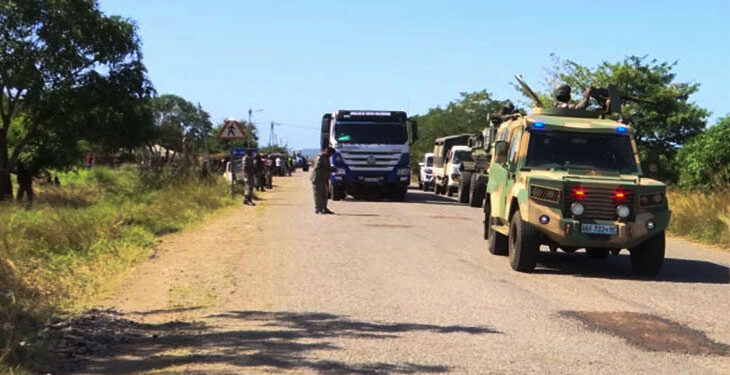
On 09 January 2026, two civilians were wounded following a firearm attack by Islamic State of Mozambique (IS-M) militants targeting a civilian goods convoy along National Road 380 (N380). The incident occurred in the vicinity of Xitaxi, within the V Congresso locality, on the stretch linking Macomia-sede to the town of Oasse, Cabo Delgado Province.
National Road 380 has remained a recurrent target of IS-M operations since October 2023. Notably, since August 2024. this current situation presents three concerning and interlinked scenarios;
- Economic Disruption and Market Vulnerability
The continued targeting of National Road 380 is likely to worsen the already fragile economic conditions in Mocímboa da Praia District. Recurrent road closures and the detention or seizure of goods disrupt supply chains, leading to shortages of essential commodities. This scarcity contributes directly to price inflation, reduced market equity, and increased hardship for local populations that depend on regular commercial flows for livelihoods and basic needs.
- Erosion of Confidence in State Security Provision
Despite the presence of Mozambique Defence Forces (FADM) escorts, the successful execution of the ambush highlights persistent security gaps along key transport corridors. Repeated attacks under such conditions risk eroding the confidence of traders, transporters, and civilians in the state’s ability to guarantee safe movement. This perception of insecurity may result in reduced commercial activity or the rerouting of trade away from affected areas.
- Expansion of IS-M Parallel Control Mechanisms
The weakening of trust in formal security arrangements may compel commercial transporters to seek alternative means of protection. In this context, the payment of “zakat” to IS-M previously observed along N380 may increasingly be viewed as a pragmatic option to ensure mobility and asset protection. This dynamic strengthens IS-M’s influence over economic corridors, reinforces its parallel governance structures, and further undermines state authority in northern Cabo Delgado.