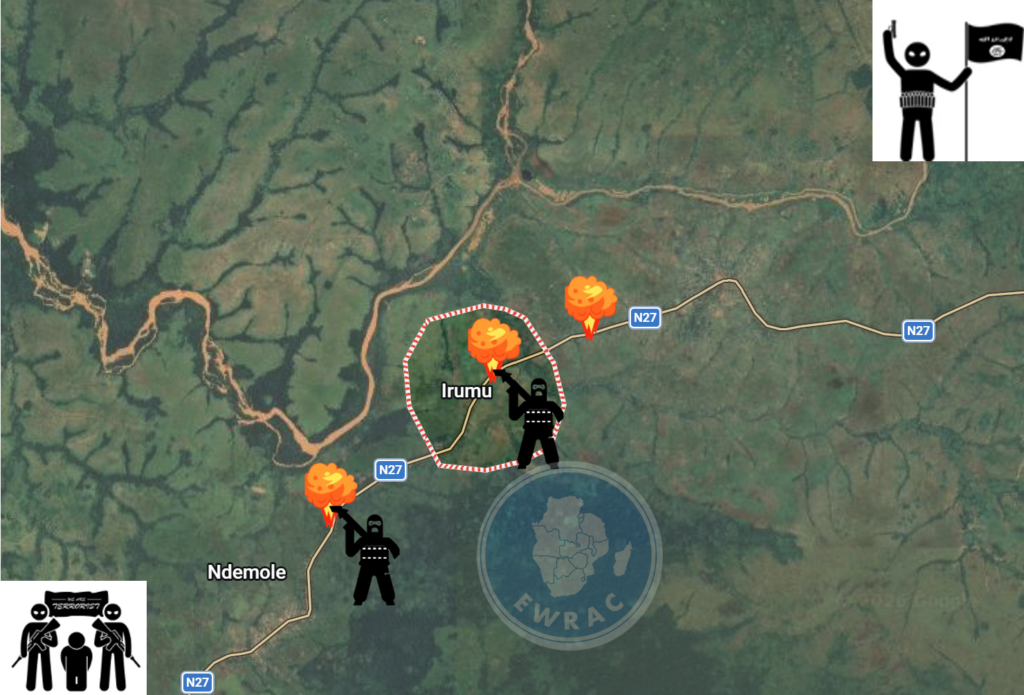
Insurgent violence has crippled local agriculture and trade in the Irumu territory, leaving rural populations facing potential famine and financial ruin. In the Lubero region, the group’s expansion is attributed to geographical barriers, security vacuums, and insufficient military logistics, further complicated by the presence of undisciplined local militias. Ultimately, the sources highlight a desperate need for better coordination and intelligence to dismantle a terror network that has successfully integrated into local socio-economic structures.
Factors contribute to the current situation:
Economic Asphyxiation in Irumu
In the southern part of the Irumu territory, particularly in Bandavilemba, the economic engine, agriculture is virtually at a standstill.
- Agricultural Collapse: Fear of attacks has forced many farmers to abandon their lands. Even when harvests like beans are successful, farmers struggle to find buyers due to the prevailing climate of terror.
- Commercial Paralysis: Recent attacks, such as the one in Butani village involving the burning of motorcycles and violence against civilians, have discouraged investment. Shops and kiosks operate at a minimum, and economic operators are hesitant to inject capital for fear of looting.
Strategic Entrenchment in Lubero
In the Lubero territory, specifically the Bapere and Baswagha sectors, ISCAP has successfully entrenched since June 2024.
- Geographical Advantages: The Bapere sector, which accounts for 51% of Lubero’s land area, is the second-largest forest massif in North Kivu. This dense, isolated terrain, filled with small footpaths and rivers without bridges, is ideal for guerrilla warfare.
- Logistical Failures: The lack of infrastructure prevents the FARDC from deploying heavy logistics. Soldiers often carry their own rations and munitions on foot, limiting their operational window to only about four days before needing to resupply, which allows ISCAP to reorganize.
- Security Vacuum and Militias: The group’s entry was facilitated by a lack of military presence, leaving the area in the hands of various Wazalendo CPU (Community Defense Groups). These local militias are often described as undisciplined or too weak to resist ISCAP, sometimes fleeing and leaving civilians vulnerable.
Socio-Economic Integration and Intelligence Gaps
ISCAP has evolved by integrating into local structures to ensure its survival:
- “Buffer Zones”: In mining areas like Isange and Budhudia, the group has established zones where they cohabit with civilians and impose a “cacao tax” on gold miners and traders to fund their operations.
- Intelligence Failures: The intelligence services (ANR) in these remote areas are severely underfunded, often lacking even basic communication credits to verify alerts.
- Local Recruitment: The group exploits the local population’s lack of understanding of their “jihadist” nature, recruiting local collaborators to act as spies or logistics providers.
Despite the efforts of the government entities calling for a three days strategic meeting in Beni (March 2026) aimed to create a “synergy” between the FARDC, UPDF, and MONUSCO to move beyond defensive stances and finally dismantle this network, ISCAP maintain entrenched amount the local community commanding and controlling the security narrative.