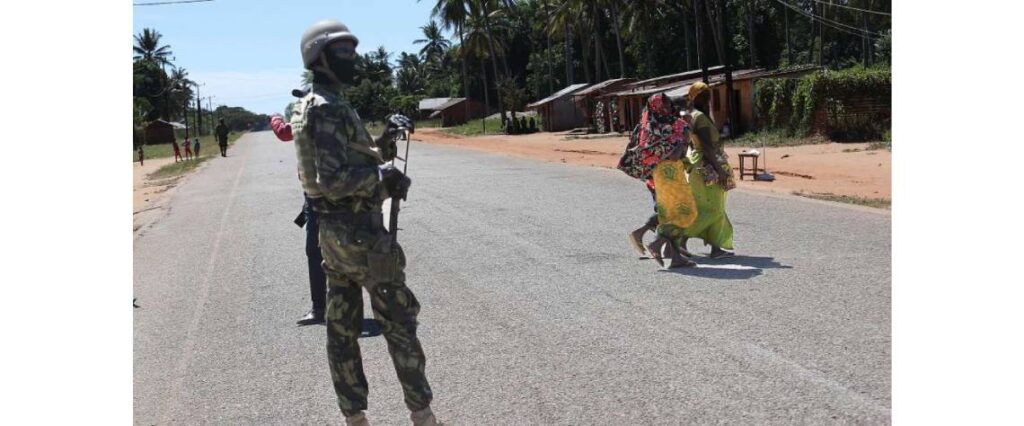
Updated report on the armed attack attributed to Islamic State Mozambique targeting a military-escorted convoy along the N380 corridor in Macomia district, Cabo Delgado province.
The incident occurred near the village of V Congresso, Chai administrative post, as vehicles traveling under military escort on the Macomia–Awasse axis came under firearm unclaimed attack by IS-M. The attack resulted in two fatalities both adult males including the driver of one of the targeted vehicles. Several individuals were injured.
In addition to the casualties, assailants looted commercial goods transported in the trucks. Some of the attacked vehicles reportedly remained at the scene as of the morning of the 23rd, reflecting both the intensity of the ambush and limited immediate recovery capacity.
Following the incident, authorities temporarily suspended military escorts along the Macomia–Awasse route in both directions. This decision led to significant congestion of vehicles in the towns of Macomia and Awasse, disrupting trade flows and civilian mobility along one of the province’s most critical supply corridors.
Operational Implications
The temporary cancellation of escorts carries broader security and socio-economic consequences. The N380 is a strategic artery linking northern and central Cabo Delgado; interruptions reinforce perceptions of territorial contestation and insurgent freedom of movement. Prolonged suspension risks deepening local grievances, particularly among transporters and traders who depend on escorted convoys for safe passage.
There is also a growing perception among segments of the population that escorted movement prioritizes cargo or convoys associated with political or military interests over ordinary commercial activity. If unaddressed, such narratives may erode trust in state protection mechanisms and create exploitable information space for insurgent propaganda.
Strategically, the attack demonstrates continued insurgent capacity to interdict secured movement along key logistical routes, underscoring the need for adaptive convoy protection measures, route clearance operations, and enhanced area dominance beyond fixed escort models.