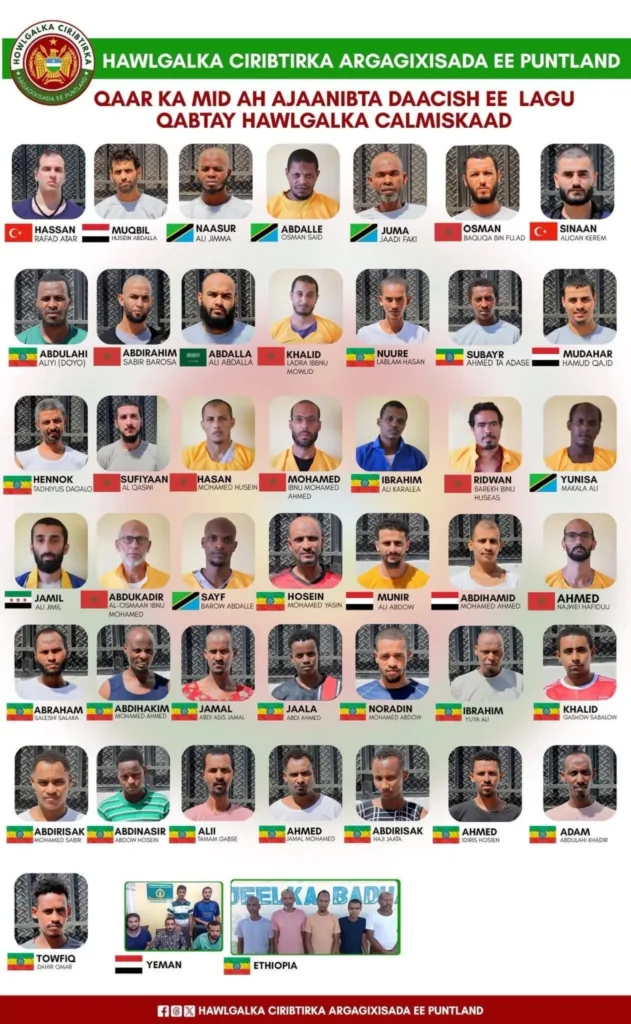
A total of at least twelve Tanzanians have been detained or killed for involvement in Al–Shabaab and Islamic State terrorist ranks between December 2024 and February 2026, reflecting a sustained pattern of Tanzanian presence within transnational jihadist structures operating in East Africa.

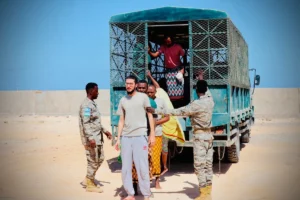
On 31 December 2024, two Tanzanians were part of a 12 member all foreign-fighter unit that carried out a complex assault on a Puntland military base under the banner of Islamic State in Somalia, employing two VBIEDs in what was assessed as one of the group’s most sophisticated operations. On 25 November 2025, two additional Tanzanians were among militants killed during a raid on ISIS positions in the Bakue and Mareero sectors of the Qal Miskaad ridge. On 18 January 2026 in Bosaso, six Tanzanians were captured during the Al-Miska’ad counteroffensive conducted by Puntland Security Forces with U.S. support. Separately, in February 2026, two Tanzanian nationals were detained in Kenya’s Kajiado County in a disrupted plot linked to Al-Shabaab.

This cumulative pattern does not suggest isolated radicalization incidents but rather structured recruitment and facilitation pipelines. Puntland authorities have confirmed that foreign fighters constitute a significant proportion of IS-Somalia’s manpower, with Ethiopians, Yemenis, and Tanzanians ranking among the largest contingents. The Cal Miska’ad mountains host the al-Karrar coordination directorate responsible for linking Islamic State affiliates across Central, Eastern, and Southern Africa, including operational theaters in Mozambique and eastern DRC. This elevates the strategic relevance of Tanzanian recruits beyond Somalia.
Tanzania’s geographic positioning between the East African Community and SADC trade corridors, its coastline along the Indian Ocean, and porous land borders create mobility environments exploitable by extremist facilitators. Recruiters, including elements associated with clandestine intelligence structures such as Amniyat and al emni, have historically used deceptive employment offers, religious study pathways, and cross-border transit channels to draw economically vulnerable individuals into external training ecosystems.
The recurring Tanzanian presence should therefore be assessed within a broader regional architecture of recruitment, transit, and financial facilitation rather than framed narrowly as domestic radicalization alone. Puntland’s operations degrade tactical nodes in Somalia, but the structural recruitment drivers remain regionally distributed and strategically interconnected.
https://ewrac.org/analysis/u-s-airstrikes-in-al-miskaad/
https://ewrac.org/analysis/kajiado-county-counterterrorism-operation/