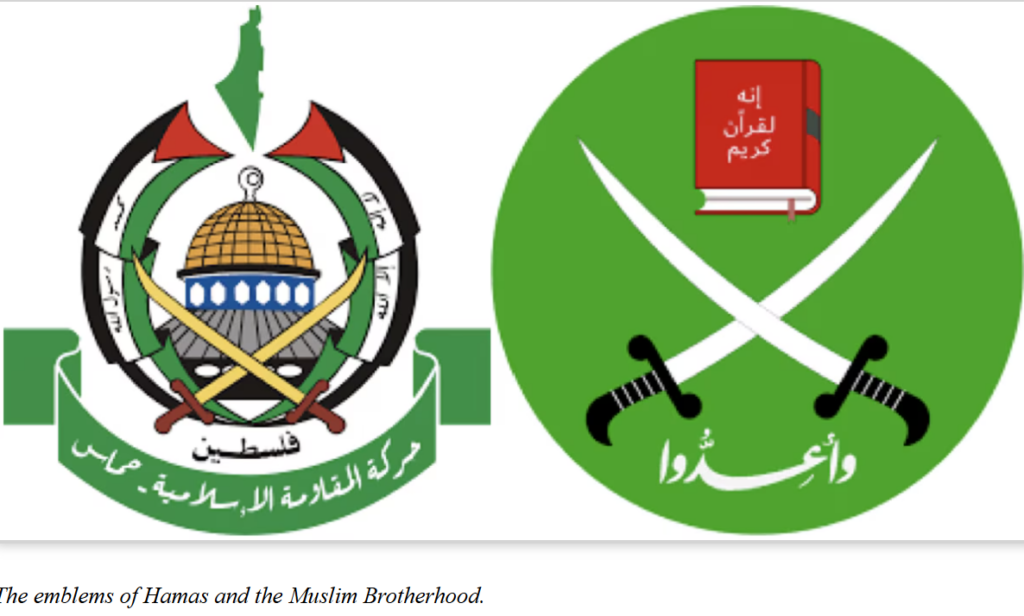
On 13 January 2026, the U.S. Department of the Treasury’s Office of Foreign Assets Control (OFAC), in coordination with the Department of State, designated the Egyptian and Jordanian branches of the Muslim Brotherhood as Specially Designated Global Terrorists under Executive Order 13224, as amended. In a parallel action, the Lebanese branch, al-Jamaa al-Islamiyah, was designated as both a Foreign Terrorist Organization and a Specially Designated Global Terrorist, along with its Secretary General Muhammad Fawzi Taqqosh, was also individually designated under E.O. 13224.
The designations are grounded in U.S. assessments that these branches provided material support to Hamas, which the United States already lists as a terrorist organization. According to U.S. authorities, the targeted branches facilitated financial transfers, logistical coordination, recruitment, and operational support linked to Hamas activities in Gaza and the broader region.
U.S. officials stated that the action reflects a broader policy direction to disrupt networks that enable or legitimize terrorist activity under the cover of civic, political, or charitable work. The designations follow Executive Order 14362 of November 24, 2025, which provides a framework for identifying specific Muslim Brotherhood chapters as terrorist entities where evidence of material support to designated groups exists.
The Egyptian Muslim Brotherhood is accused of coordinating with Hamas elements in 2024–2025, including facilitating the movement of individuals seeking to join militant operations in Gaza and supporting financial channels tied to Hamas operatives. The Jordanian branch, despite its formal dissolution by court order in 2020, is alleged to have maintained networks that engaged in recruitment, fundraising, and technical support activities involving rockets, explosives, and drones.
Under U.S. sanctions law, all property and interests in property of the designated entities within U.S. jurisdiction are blocked. U.S. persons are generally prohibited from engaging in transactions involving these entities, and foreign financial institutions that knowingly facilitate significant transactions on their behalf risk secondary sanctions. Civil and criminal penalties may apply for violations.
Strategically, the move signals a shift from targeting only violent offshoots toward addressing enabling ecosystems. The Muslim Brotherhood, founded in Egypt in 1928, operates as a transnational ideological movement with decentralized national branches. While some branches participate in political processes, U.S. authorities argue that certain chapters have crossed the threshold from ideological alignment into actionable support for terrorism.
The designations are likely to intensify geopolitical polarization around the Brotherhood. Egypt, the United Arab Emirates, and Saudi Arabia have long treated the movement as a security threat, whereas some European states have permitted Brotherhood-affiliated organizations to operate legally under civil society frameworks. The U.S. action may prompt closer scrutiny of financial flows, charities, and transnational networks linked to Brotherhood-aligned entities.
Ultimately, the impact of the decision will depend on enforcement, intelligence cooperation, and the degree to which designated branches can adapt through informal financing or decentralized structures. The stated objective of the sanction’s regime is behavioral change disrupting financial pipelines and constraining operational support to terrorist actors rather than symbolic designation alone.