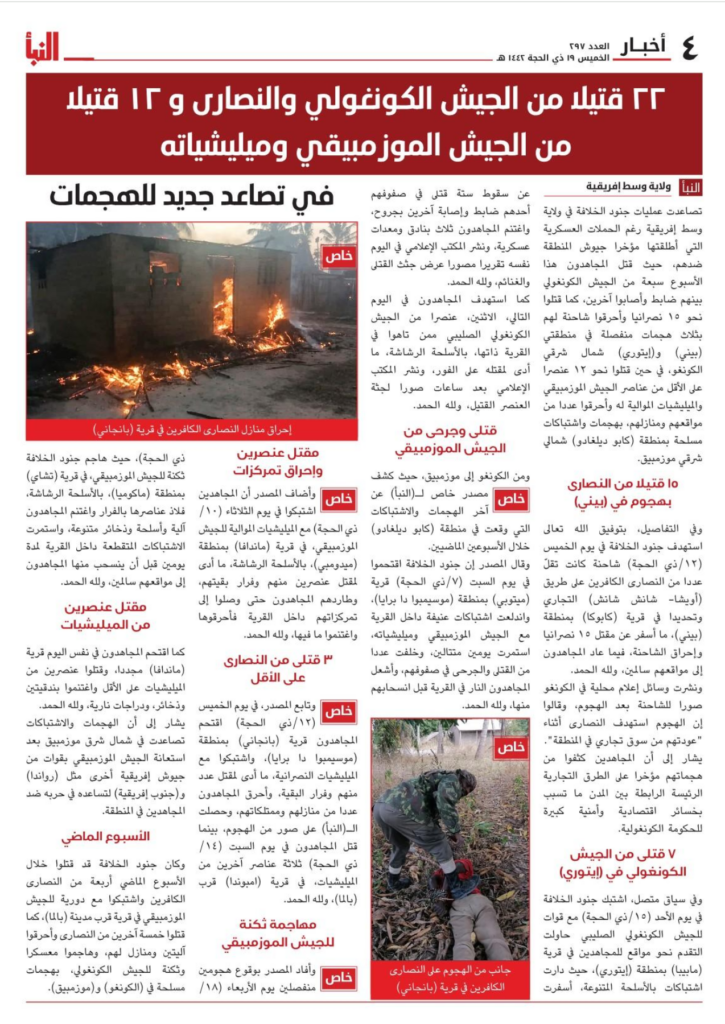
Islamic State of the Central Africa Province (ISCAP)
The referenced edition of Al-Naba represents a structured propaganda and operational signaling product from the Islamic State Central Africa Province (ISCAP), covering activities in eastern DRC (Beni–Ituri axis) and northern Mozambique (Cabo Delgado). The content serves three primary purposes: narrative dominance, force projection, and morale reinforcement.
- Operational Signaling and Escalation Narrative
The report frames the violence as a “new escalation” despite “military campaigns launched against them by regional armies.” This messaging is deliberate. It attempts to counter perceptions that joint operations by the Mozambican forces, Rwanda, and SADC contingents have strategically degraded ISCAP capacity.
By highlighting attacks in:
- Beni and Ituri (DRC)
- Macomia, Mocímboa da Praia, Palma, Muidumbe (Mozambique)
ISCAP reinforces the image of a geographically resilient, bi-national insurgent structure capable of sustaining parallel theaters of operation.
The operational themes emphasized include:
- Barracks assaults
- Trade route ambushes
- Village overruns
- Targeted killings of soldiers and civilians
- Seizure of weapons and vehicles
This reflects classic insurgent doctrine: attack mobility, undermine fixed positions, and prioritize symbolic targets.
- Casualty Inflation and Psychological Warfare
The casualty figures (22 Congolese soldiers, 12 Mozambican soldiers, 15 Christians, etc.) likely contain inflation. Historically, ISIS media outlets amplify enemy losses while minimizing their own (notably acknowledging only “six killed including an officer”).
This asymmetry serves recruitment and morale objectives:
- Demonstrate operational superiority
- Reinforce divine sanction narrative (“praise be to God”)
- Maintain global jihadist credibility
The repeated emphasis on burning homes and trucks is symbolic. Fire is used as both a tactical and visual propaganda tool, creating dramatic imagery for dissemination.
- Strategic Focus on Trade Routes
A critical analytical takeaway is the targeting of:
- The Oicha–Chanche N4 trade route (DRC)
- N380 major mobility corridor in Cabo Delgado
This reflects economic warfare doctrine. By striking trade arteries, Islamic State seeks to:
- Disrupt local economies
- Undermine government legitimacy
- Restrict civilian movement
- Impose de facto control through fear
This mirrors similar corridor-focused tactics along Mozambique’s N380 and secondary feeder routes.
- Cross-Theater Synchronization
The report deliberately links Congo and Mozambique operations in a single narrative stream. This reinforces the “Central Africa Province” identity rather than separate insurgencies.
Strategically, this serves:
- Branding consolidation under ISIS central leadership
- Transnational recruitment appeal
- Demonstration of operational depth across porous borders
It also suggests continued mobility corridors and ideological alignment between rebels groups in DRC and IS-M cells in Mozambique.
- Governance and Control Signaling
Repeated references to seizing weapons, vehicles, and burning positions signal more than battlefield success. They are assertions of territorial contestation. Even if temporary, these village overruns project an image of insurgent sovereignty.
The narrative indicates:
- Ability to overrun lightly defended positions
- Capability to withdraw “safely” after engagements
- Sustained clash durations (two-day engagements claimed)
If partially accurate, this suggests:
- Insufficient holding capacity by state forces
- Gaps in rapid reaction and air mobility
- Intelligence shortfalls in pre-empting insurgent concentration
- Strategic Intent
The broader strategic messaging indicates that ISCAP aims to demonstrate:
- Endurance despite multinational counteroffensives
- Ability to conduct simultaneous offensive operations
- Expansion of attacks against both military and civilian targets
This edition is less about territorial conquest and more about perception warfare. It attempts to reshape the narrative from “containment” to “resurgence.”
- Outlook
If operational tempo matches even a fraction of the claims, the conflict is entering a phase of insurgent recalibration rather than decline. The emphasis on trade routes, barracks raids, and cross-border continuity suggests a shift toward sustained attrition rather than territorial holding.
For regional actors, the implication is clear: ISCAP’s center of gravity is mobility and psychological dominance, not static territory. Counter-strategy must therefore prioritize corridor security, intelligence penetration of recruitment networks, and persistent area denial otherwise insurgent messaging will continue to outpace battlefield realities.